
Guides / First words
First wordsHow to teach a child to write their name
A child's own name is often the first word they want to write. It's on their peg, their coat and their birthday cards, so it means something. That makes it a great way into letter formation, as long as the steps stay small.
Capital or lower case?
Most schools and nurseries in the UK teach a name with a capital first letter and the rest in lower case: Maya, not MAYA. Capitals can be easier for small hands because they're mostly straight lines, but learning the name in all capitals means relearning it later. If your child already writes it in capitals, that's fine; gently show the lower-case version alongside.
Step by step
- See it. Write the name where your child sees it every day, and point out its letters in books and on signs.
- Build it. Make the name with magnet letters, letter cards or play dough before any pencil work.
- Trace it. Write the name in dots or highlighter, with a start dot on each letter, and let your child trace it.
- Copy it. Write the name at the top of the page and let them copy it underneath.
- Write it. Finally, write it from memory. Expect some letters to be big, some small, and some backwards for a while.
Ideas to keep it fun
- One letter at a time. If the name is long, practise the first letter, then the first two, and build up.
- Use it for real: on a card for Grandma, on a drawing, on a label for their bedroom door.
- Rainbow writing: trace over the name again in different colours.
- Big and messy: write it in sand, in shaving foam or with a wet brush on the fence.
Keep sessions short and stop on a good attempt. Starting each letter in the right place matters more than neatness at this stage.
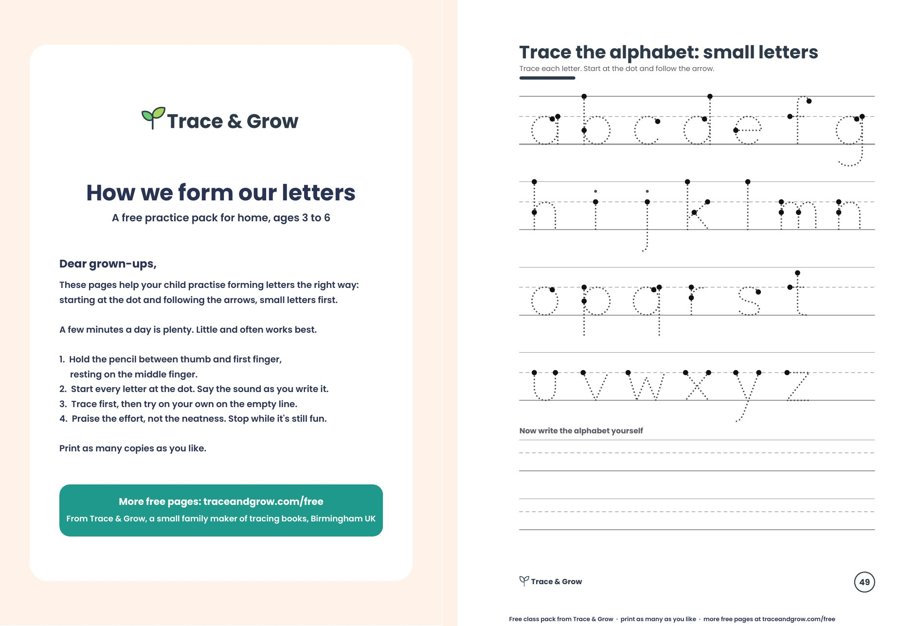
Free letter formation worksheets
Six pages for home or class: the alphabet, tracing every letter, tall and tail letters, and writing your name. Teachers, send it home with your class.
When you want more pages
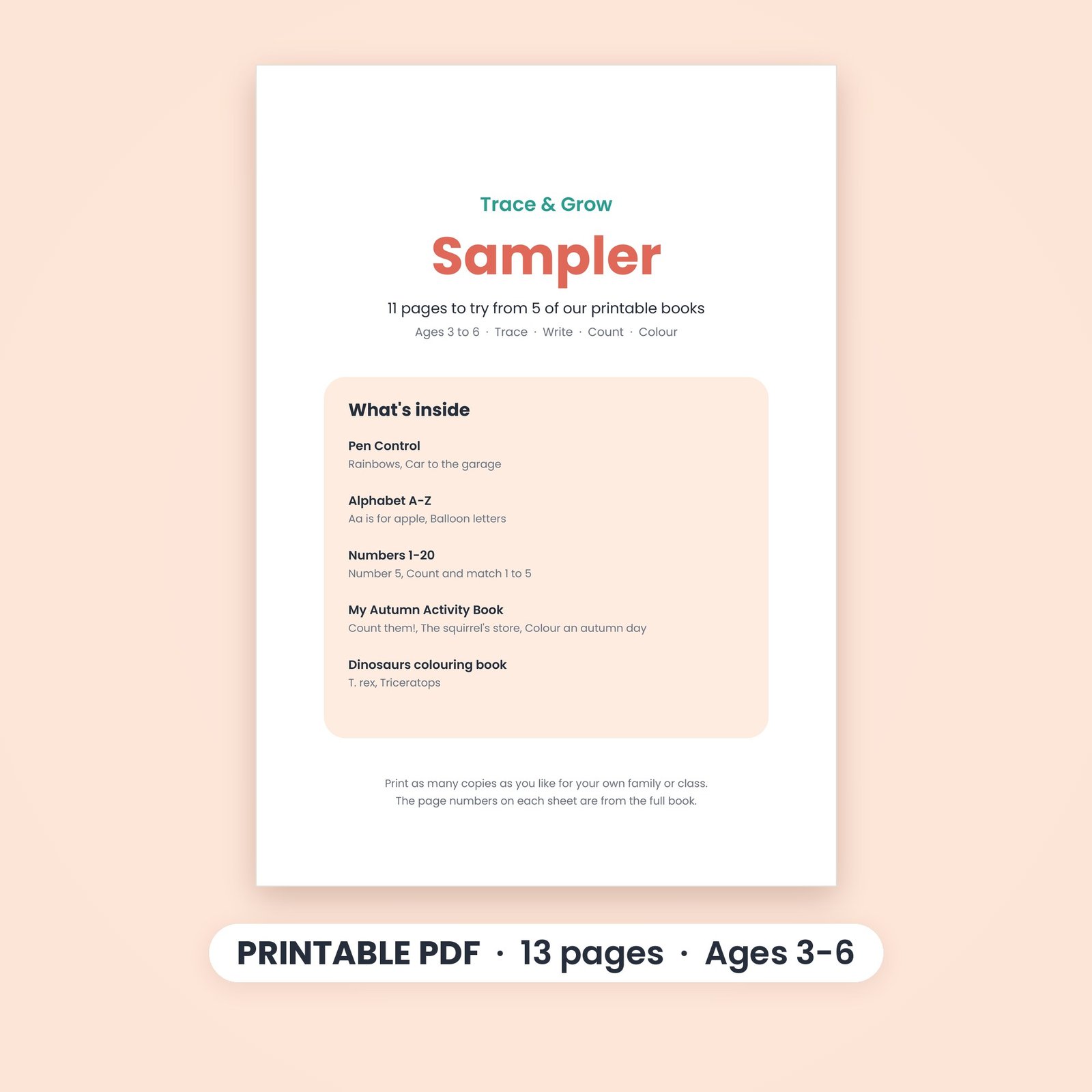 Try us for £1 · ages 3–6
Starter Sampler
11 real pages from five of our books, different from the free ones, to print at home. One per order.
See the sampler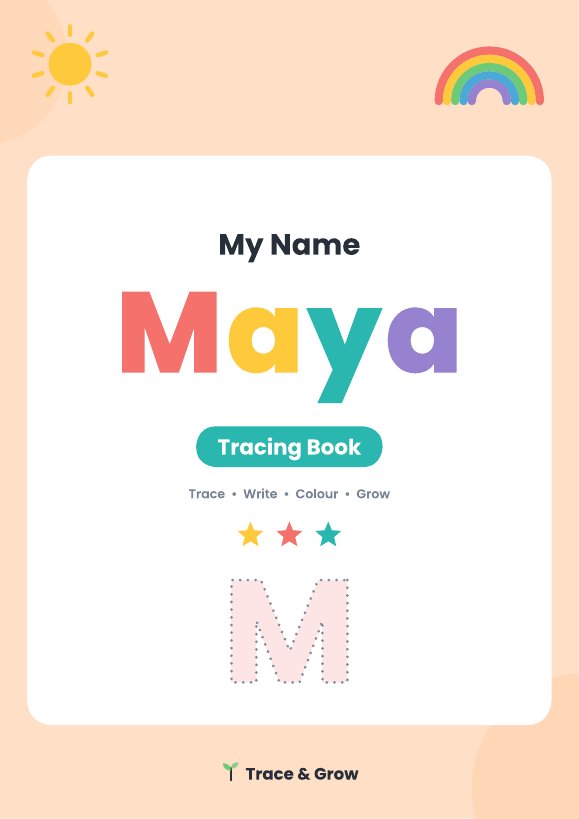 Ages 3–6
My Name Tracing Book (Printable)
20 A4 pages made with your child's first name: a page for each letter, then whole-name tracing that gets smaller.
See the book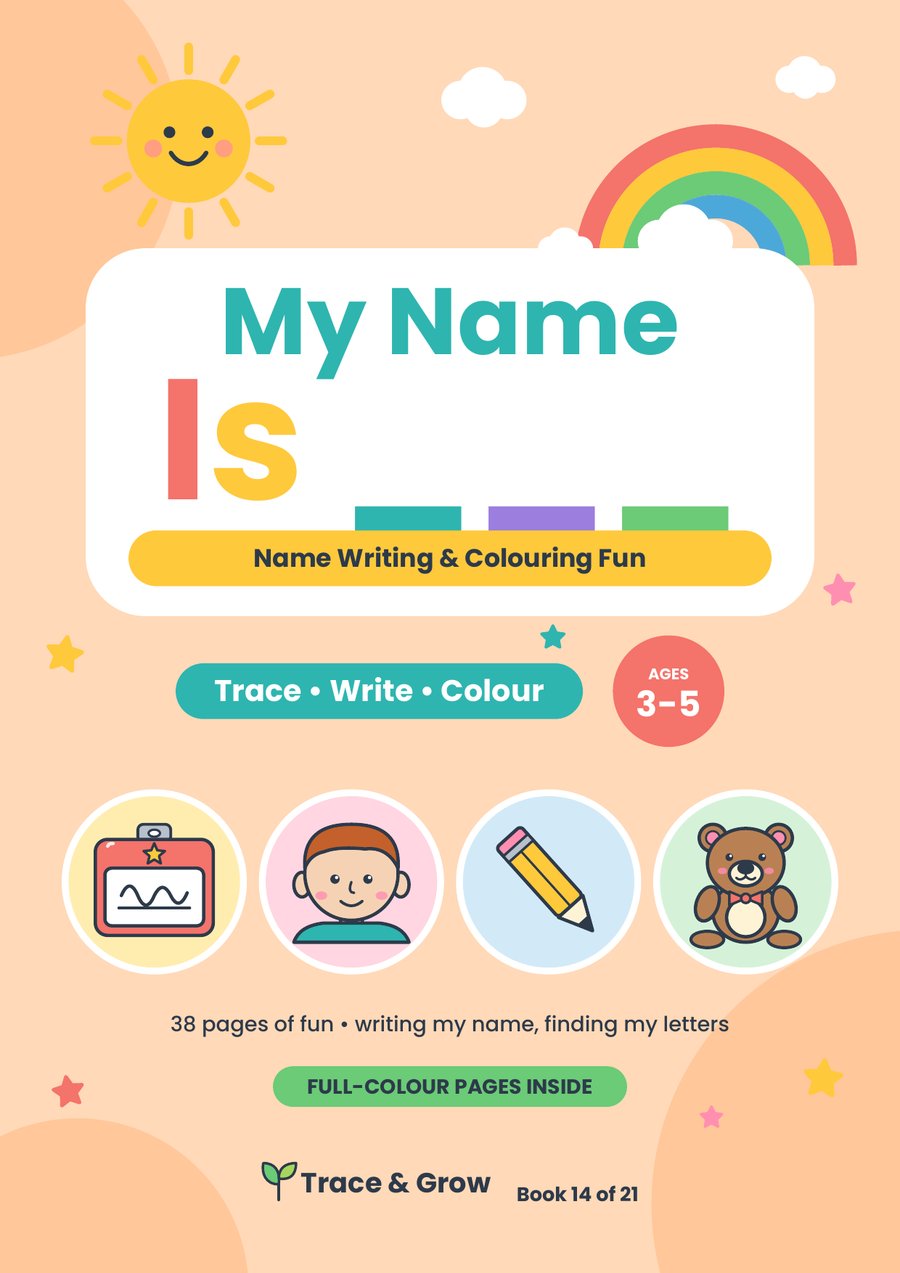 Ages 3–5
My Name Is
A grown-up writes the name as a model, then your child traces it, copies it on writing lines and plays name games.
See the book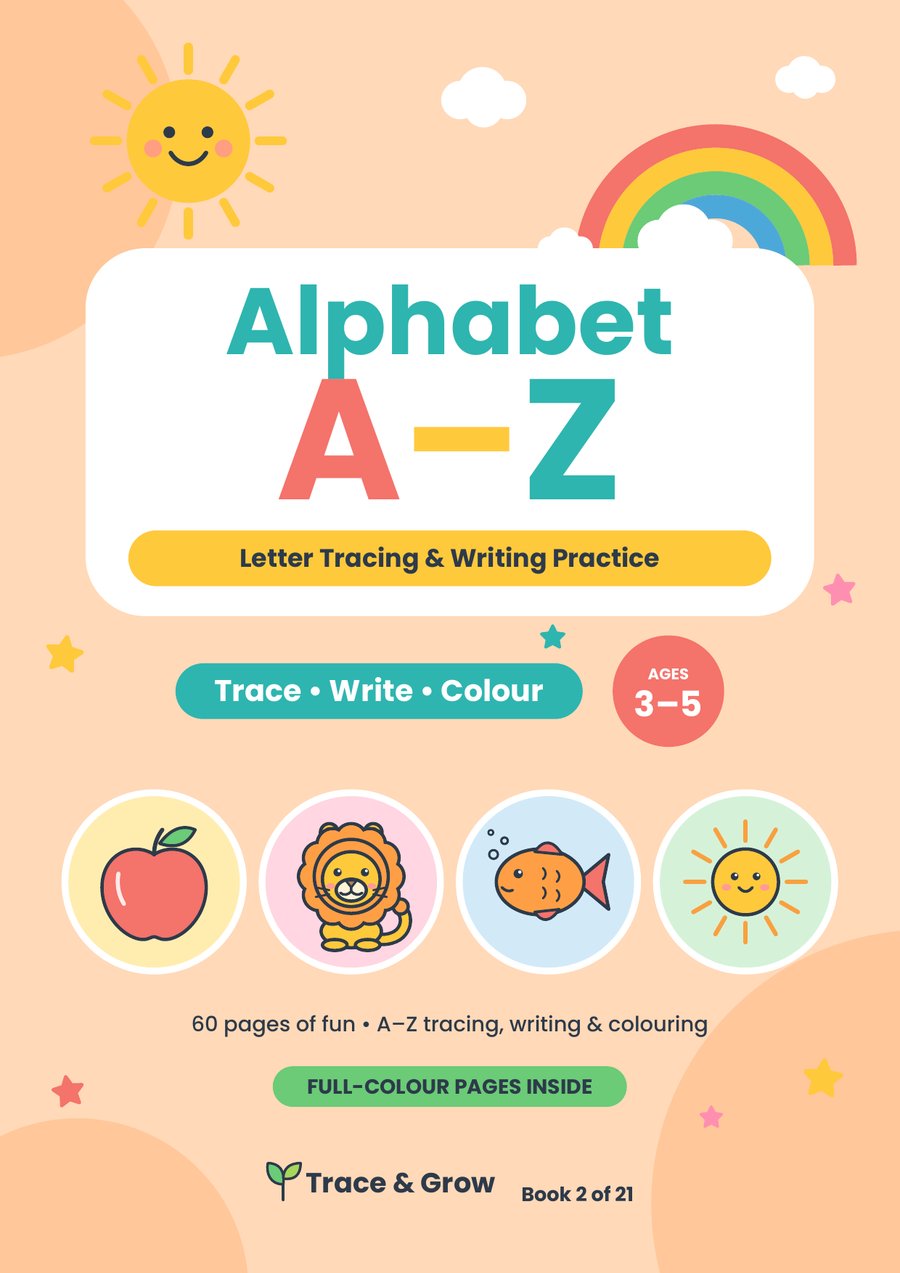 Ages 3–5
Alphabet A–Z
A page for every letter, small and capital, with start dots, arrows, a word to trace and lines to write on.
See the bookQuestions parents ask
Should my child write their name in capitals?
Most UK schools and nurseries teach a capital first letter followed by lower-case letters. If your child already uses all capitals, show the lower-case version alongside it rather than correcting them.
What is the best way to practise writing a name?
Build it with letters first, then trace it, then copy it from a model, then write it from memory. Short, regular practice works best.
Can I make a name tracing sheet for free?
Yes. Our free name tracing worksheet maker makes a printable sheet for any name, in English or Arabic.
Read next
- Free name tracing worksheet maker (English and Arabic)
- Letter formation at home: the lowercase letter families
- Reception readiness checklist
More guides
- Tracing worksheets for 3 year olds: where to start
- Pre-writing shapes and patterns: what to practise before letters
- Phase 2 phonics letter formation: tracing s, a, t, p and the first sounds
- Handwriting practice for Reception: a calm routine for home
- b and d mix-ups: simple tricks and worksheets that help
- Visual timetable for home: how to make one work
- Arabic letter forms: the beginning, middle and end shapes
- Number formation rhymes for 0 to 10
Get a new free page every month
Join the list for a printable star chart, 10% off books in your first order (not the UK delivery included in each price) and a monthly email with new free pages. Unsubscribe any time.