
Guides / Arabic at home
Arabic at homeArabic letter forms: the beginning, middle and end shapes
Arabic is written from right to left, and the letters in a word join up. Because of that, most letters change shape a little depending on where they sit in the word. Children often find this the most surprising part of learning the Arabic alphabet, but there is a clear pattern to it.
The four forms
Most Arabic letters have four forms:
- Alone (isolated): the letter on its own, as it appears on an alphabet chart.
- Beginning (initial): at the start of a word, joined to the letter after it on the left.
- Middle (medial): joined on both sides.
- End (final): at the end of a word, joined to the letter before it on the right.
Take baa (ب). At the beginning of a word it shrinks to a small tooth with its dot below (بـ), in the middle it's the same small tooth joined on both sides (ـبـ), and at the end it keeps its full bowl shape, joined on the right (ـب). The dot never moves, which is a useful thing to point out: the dots tell you which letter it is.
The six letters that don't join on the left
Six letters never join to the letter that follows them: alif (ا), daal (د), dhaal (ذ), raa (ر), zaay (ز) and waaw (و). They only have two forms, alone and end, and the letter after them starts a fresh join. Learning these six as a group saves a lot of confusion.
Teaching tips
- Learn each letter alone first, then its other forms once the main shape is secure.
- Teach letters with the same body together, such as baa, taa and thaa, which differ only in their dots.
- Write the body of the letter first and add the dots last.
- Start every row on the right, so the right-to-left habit builds from the beginning.
- Show a real short word for each form, so children see why the shapes change.
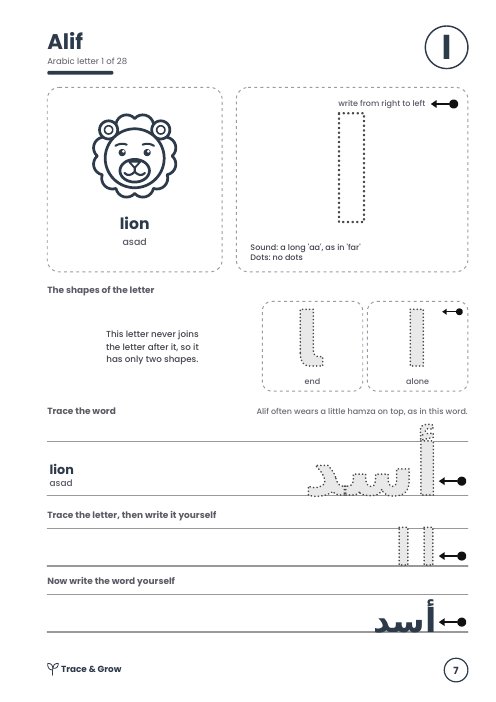
Free Arabic alphabet tracing worksheets
Eight pages from Arabic Letters: the whole alphabet chart, right-to-left warm-ups and the first four letters to trace.
When you want more pages
 Try us for £1 · ages 3–6
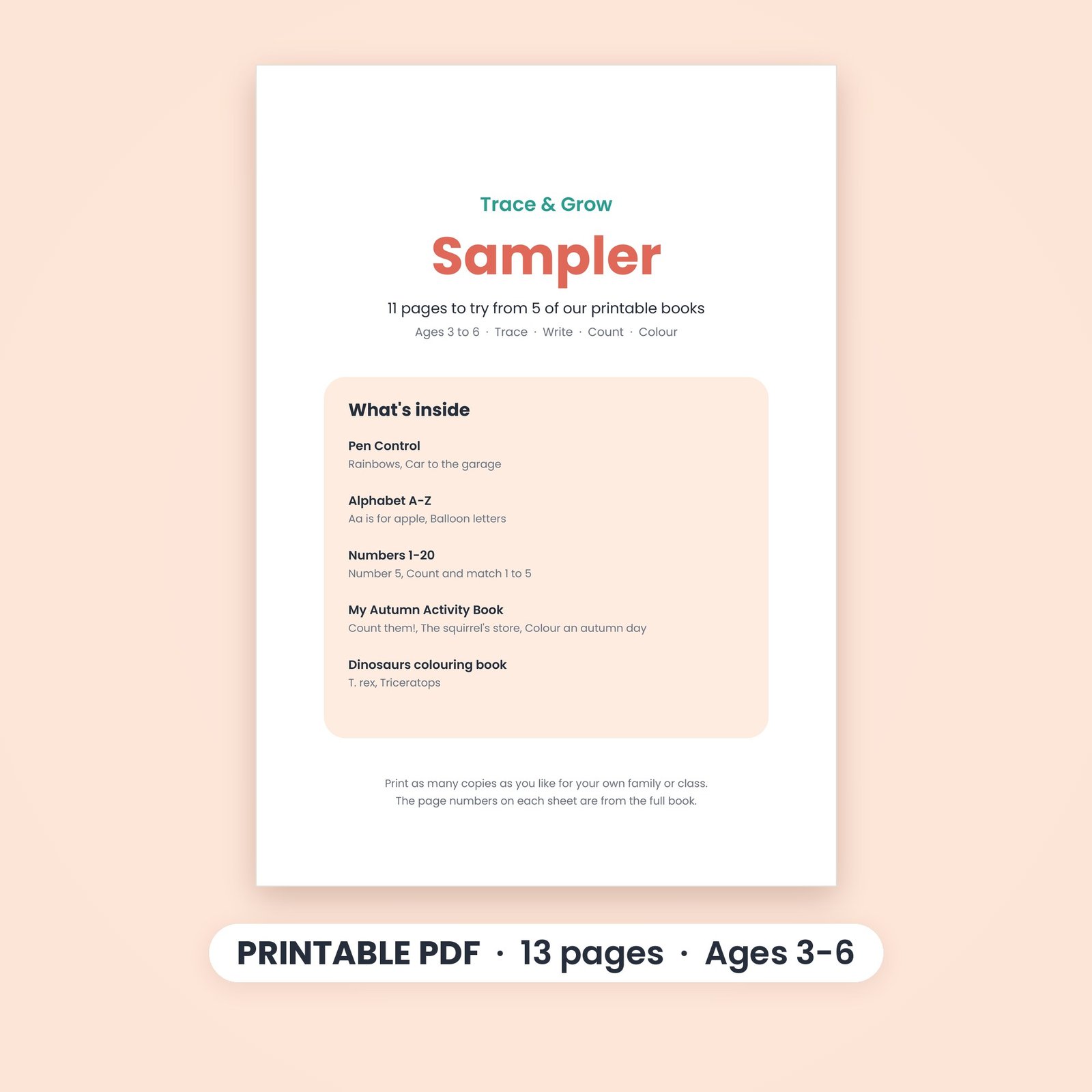
Starter Sampler
11 real pages from five of our books, different from the free ones, to print at home. One per order.
See the sampler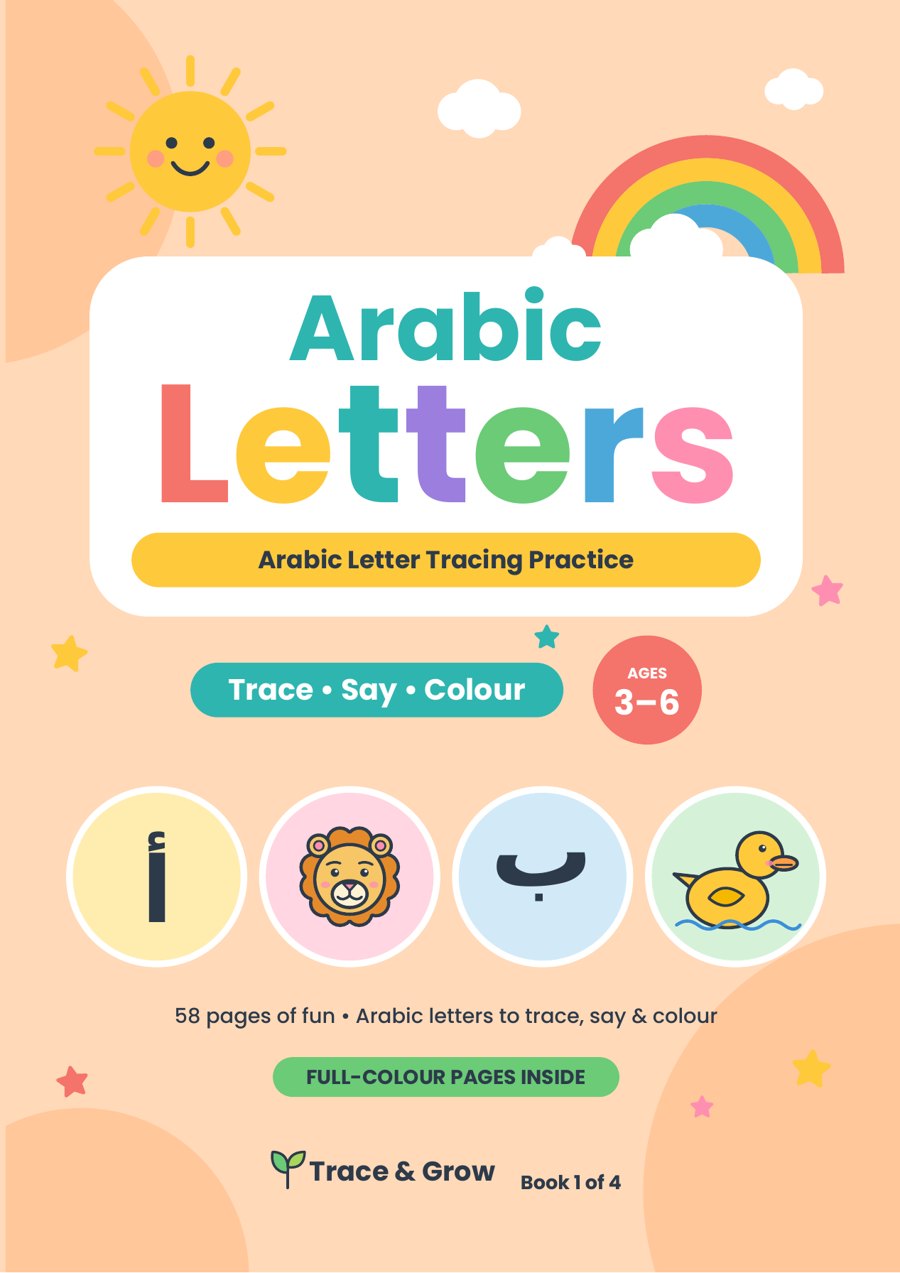 Ages 3–6
Arabic Letters
All 28 letters with dotted tracing, every letter in its four shapes, and matching and build-the-word games.
See the book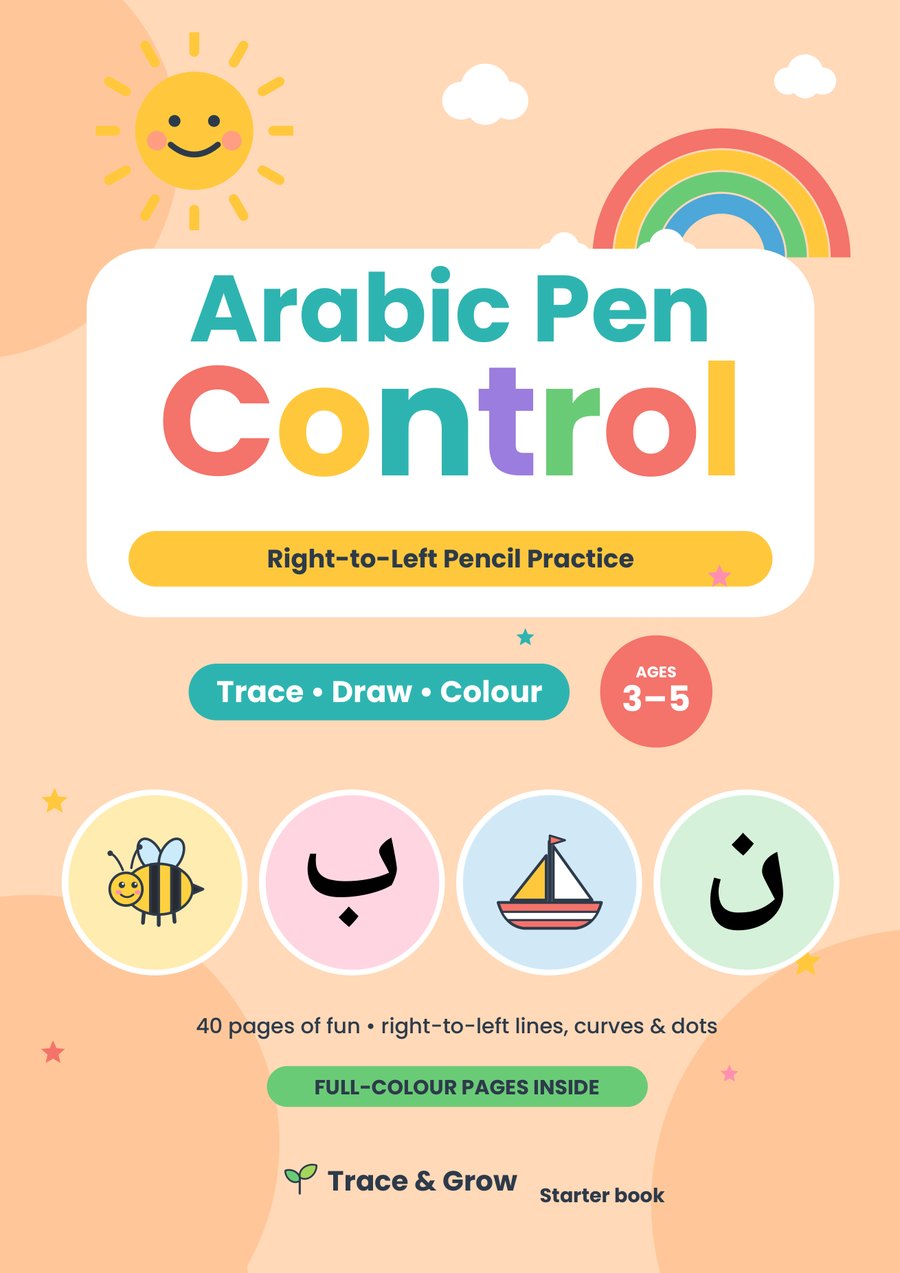 Ages 3–5
Arabic Pen Control
Right-to-left lines, waves, loops, hooks and dots above and below, before the first letters.
See the book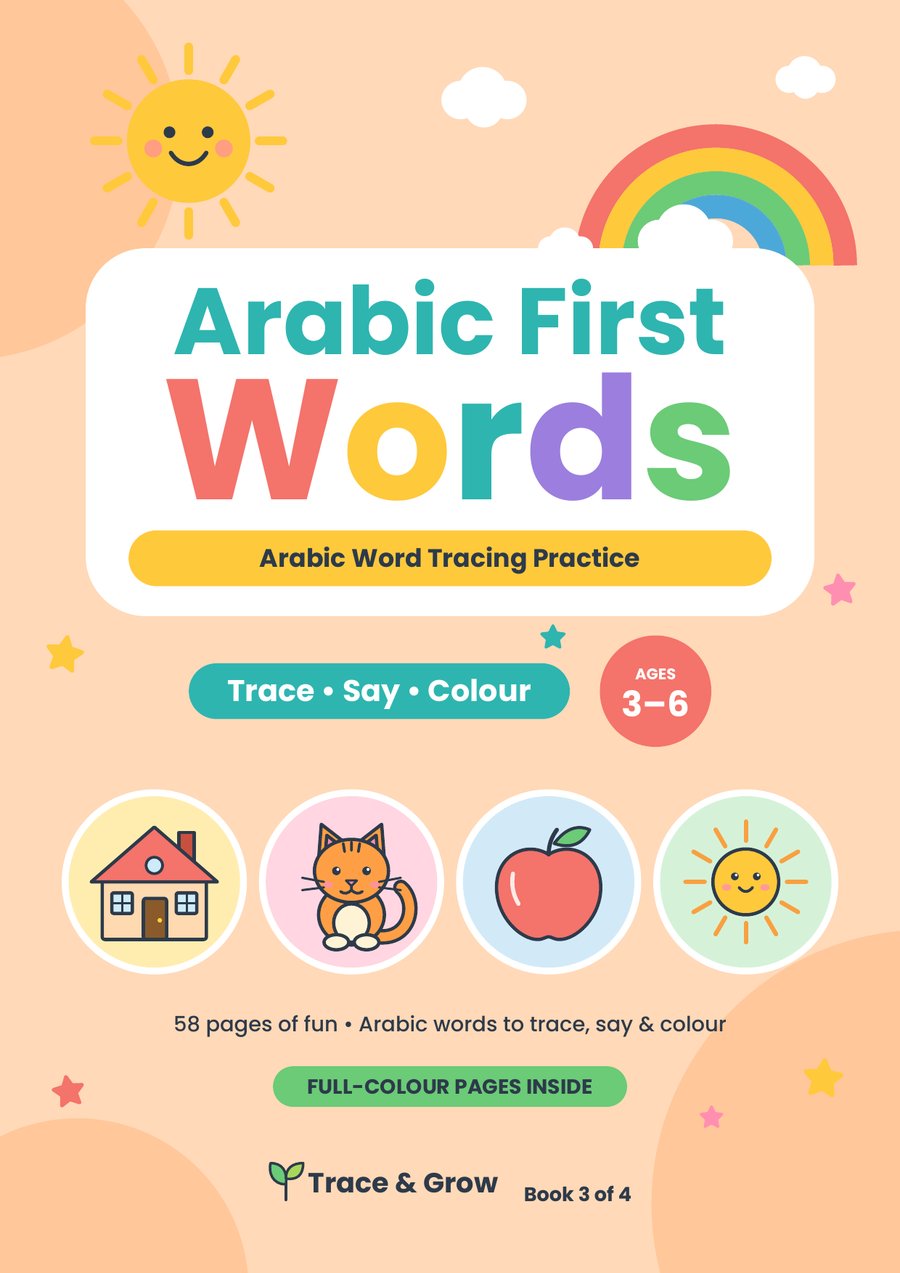 Ages 3–6
Arabic First Words
50 everyday picture words to look at, say, trace and write, once the letters are familiar.
See the bookQuestions parents ask
Why do Arabic letters change shape?
Arabic letters join up within a word, so most letters have a slightly different shape at the beginning, in the middle and at the end of a word, as well as their shape on their own.
Which Arabic letters don't join?
Six letters never join to the letter after them: alif, daal, dhaal, raa, zaay and waaw. They only have an alone form and an end form.
Should children learn all four forms at once?
It's usually easier to learn each letter on its own first, then its beginning, middle and end shapes once the main shape feels familiar.
Read next
More guides
- Tracing worksheets for 3 year olds: where to start
- Pre-writing shapes and patterns: what to practise before letters
- Phase 2 phonics letter formation: tracing s, a, t, p and the first sounds
- Handwriting practice for Reception: a calm routine for home
- b and d mix-ups: simple tricks and worksheets that help
- Visual timetable for home: how to make one work
- How to teach a child to write their name
- Number formation rhymes for 0 to 10
Get a new free page every month
Join the list for a printable star chart, 10% off books in your first order (not the UK delivery included in each price) and a monthly email with new free pages. Unsubscribe any time.