
Guides / Phonics at home
Phonics at homePhase 2 phonics letter formation: tracing s, a, t, p and the first sounds
Phase 2 is the first set of letter sounds that many children in England learn in Reception. As well as hearing and saying each sound, children learn to write the letter for it. Practising the shape while saying the sound helps the two go together.
The Phase 2 letters
The Letters and Sounds programme grouped the Phase 2 sounds into five sets, and many schools use a similar order:
- Set 1: s, a, t, p
- Set 2: i, n, m, d
- Set 3: g, o, c, k
- Set 4: ck, e, u, r
- Set 5: h, b, f, ff, l, ll, ss
Today schools choose their own phonics programme, so the order and the little rhymes used for each letter can differ. Ask your child's teacher which programme they follow and copy its order and words at home, so your child hears the same thing in both places.
Tips for the tricky ones
- s: start at the top, curl round to the left like a c, then back the other way. Saying "round and back" helps.
- a, d, g, o and c all start with the same round c shape, so practise them together.
- t: one line down with a little curve at the bottom, then the cross.
- p and g go below the line. Writing lines with a clear baseline make this easier to see.
- k is hard for many children: a tall line, then in to the middle and out again.
- b and d are easy to mix up. Teach them on different days and say how each one starts.
A short routine
Say the sound, trace the letter while saying it, trace it again, then write it once on its own and circle the best one. Two or three letters a session is plenty. Lower-case letters come first, as they are what children read most.
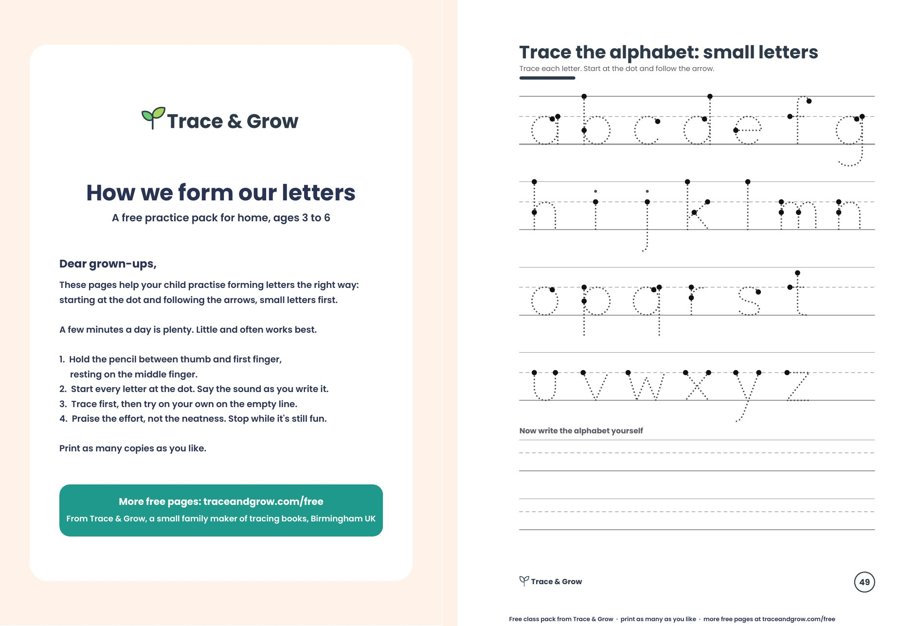
Free letter formation worksheets
Six pages for home or class: the alphabet, tracing every letter, tall and tail letters, and writing your name. Teachers, send it home with your class.
When you want more pages
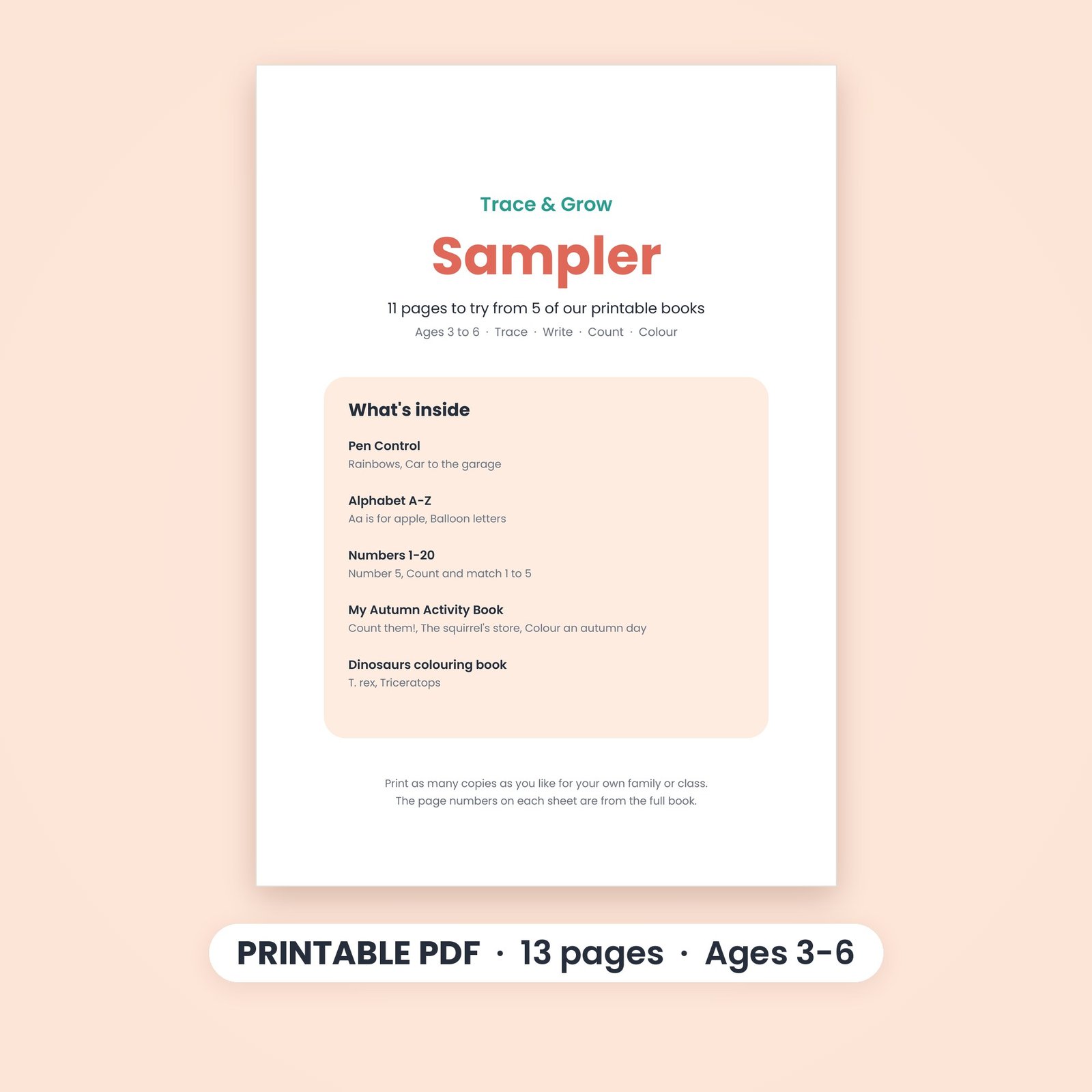 Try us for £1 · ages 3–6
Starter Sampler
11 real pages from five of our books, different from the free ones, to print at home. One per order.
See the sampler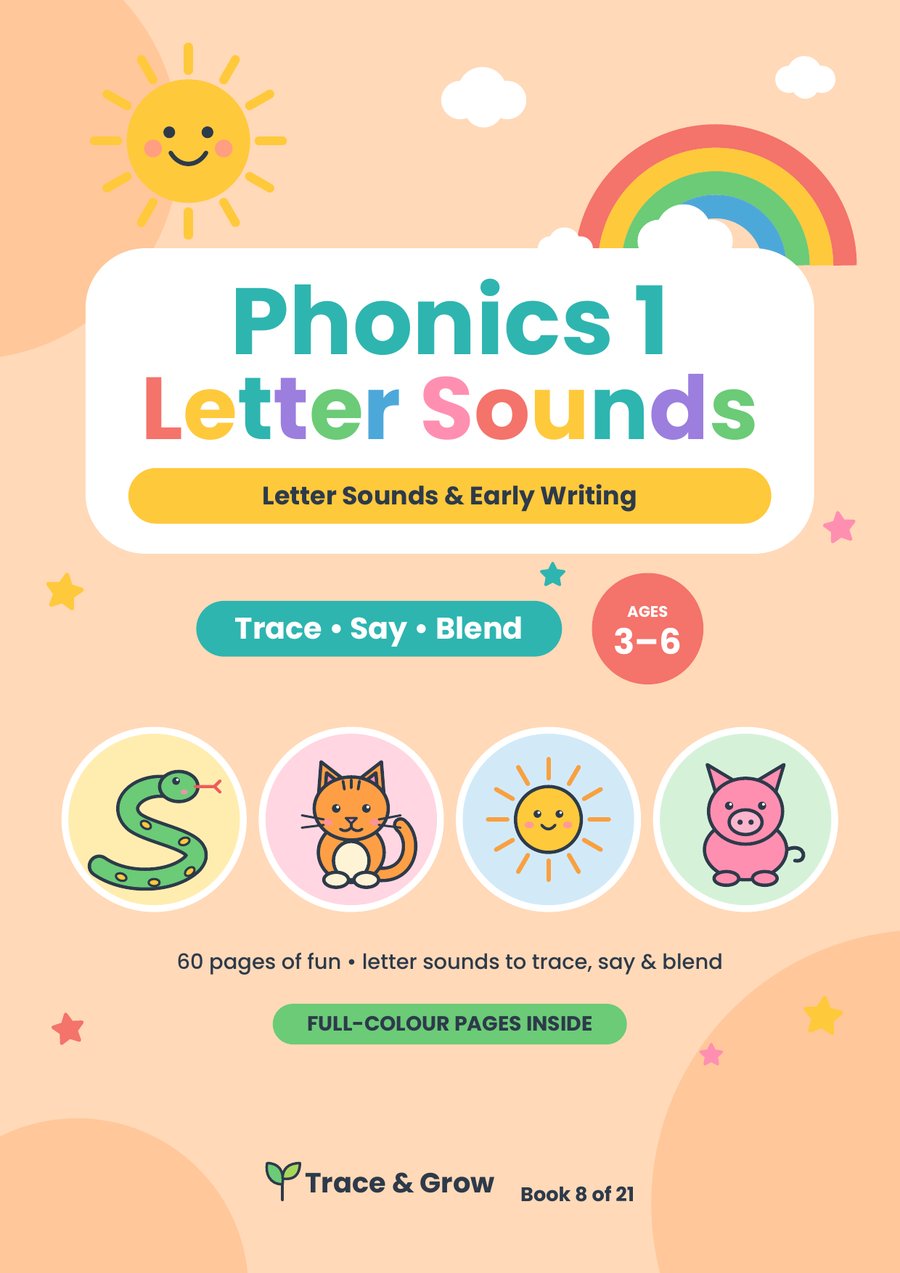 Ages 3–6
Phonics 1: Letter Sounds
Trace, say and blend the first sounds in small groups, with a write-it-yourself line after every tracing row.
See the book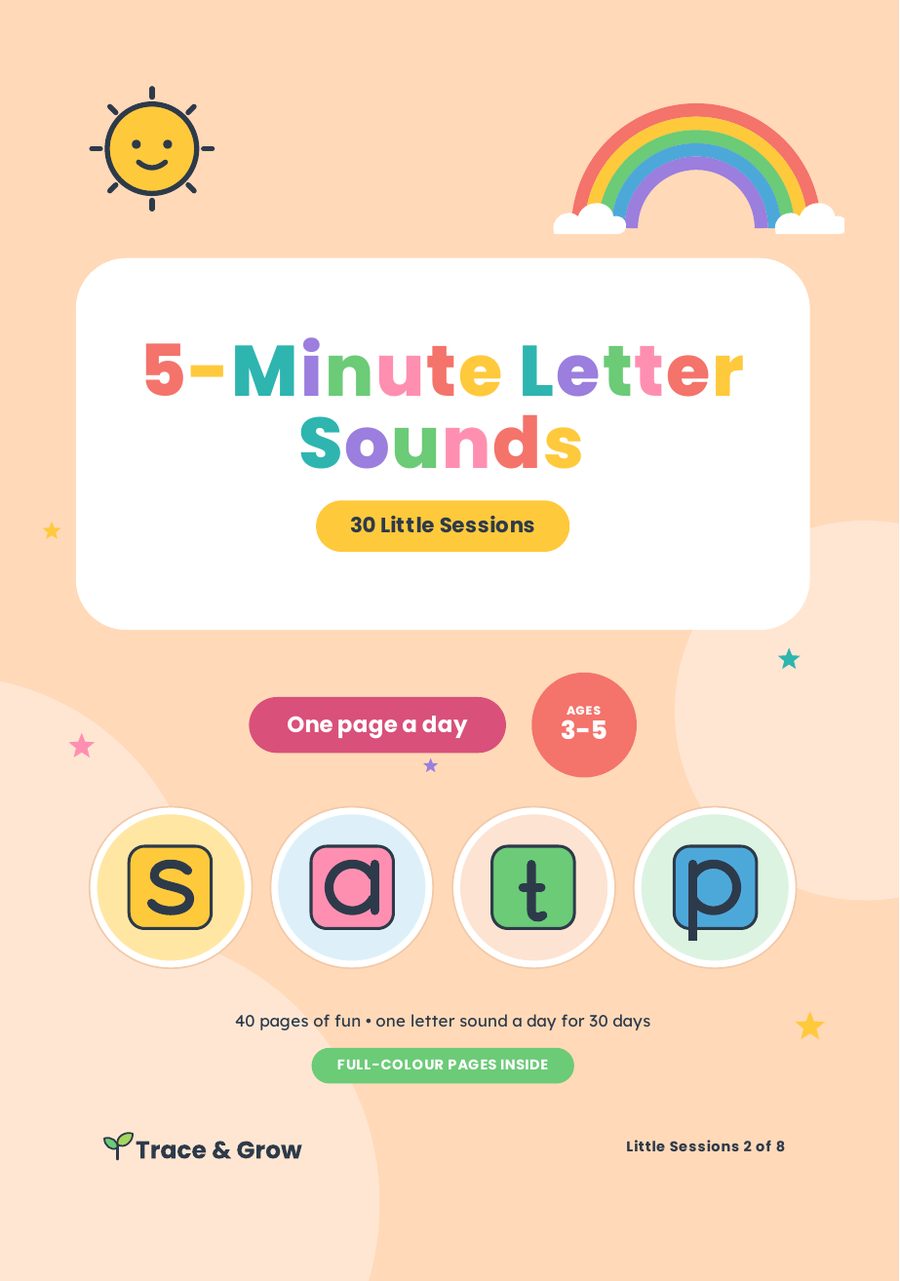 Ages 3–5
5-Minute Letter Sounds
One sound a day for 30 days, starting s, a, t, p, i, n: say it, trace it and find the pictures that start with it.
See the book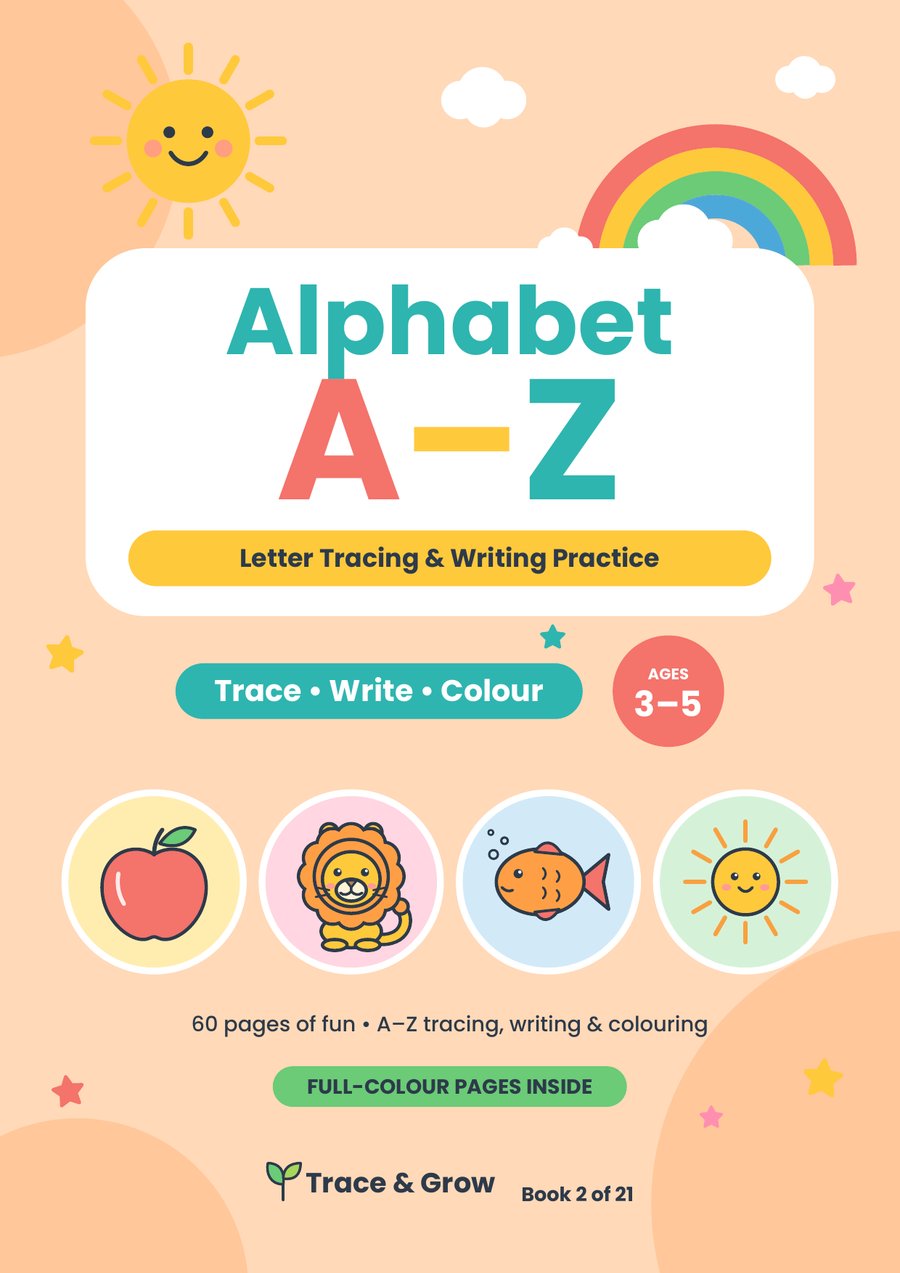 Ages 3–5
Alphabet A–Z
A page for every letter, small and capital, with start dots, arrows, a word to trace and lines to write on.
See the bookQuestions parents ask
What letters are in Phase 2 phonics?
In the Letters and Sounds order: s, a, t, p, then i, n, m, d, then g, o, c, k, then ck, e, u, r, then h, b, f, ff, l, ll and ss. Your child's school programme may use a slightly different order.
Should children learn capital letters in Phase 2?
Lower-case letters usually come first, because they are what children see most when reading. Capitals are often added for names and the start of sentences later.
How do I help my child form letters correctly?
Show where each letter starts, say the sound as they trace it and keep sessions short. A start dot and an arrow on every letter makes it much easier.
Read next
More guides
- Tracing worksheets for 3 year olds: where to start
- Pre-writing shapes and patterns: what to practise before letters
- Handwriting practice for Reception: a calm routine for home
- b and d mix-ups: simple tricks and worksheets that help
- Visual timetable for home: how to make one work
- Arabic letter forms: the beginning, middle and end shapes
- How to teach a child to write their name
- Number formation rhymes for 0 to 10
Get a new free page every month
Join the list for a printable star chart, 10% off books in your first order (not the UK delivery included in each price) and a monthly email with new free pages. Unsubscribe any time.