
Guides / Tricky letters
Tricky lettersb and d mix-ups: simple tricks and worksheets that help
Mixing up b and d is one of the most common things parents notice when children start reading and writing. The two letters are mirror images of each other, and young children are used to a world where an object is the same thing whichever way it faces. Most children sort them out with time, practice and a trick or two.
Tricks that help
- The bed trick. Make two fists with your thumbs pointing up and put your knuckles together. Your left hand makes a b and your right hand makes a d, and together they look like a bed. The word "bed" starts with b and ends with d.
- Start in a different place. b starts with a tall line down, then the bump: "bat, then ball". d starts with the round c shape, then the tall line: "drum, then drumstick".
- Link d to c. If your child can write c, they can start a d: write a c, then add the tall line.
- Use a word they know. Pick a b word and a d word your child can read, write them on a card and keep it by the table to check against.
Practise one at a time
It can seem sensible to practise b and d side by side, but that often keeps the muddle going. Teach one letter until it's secure, then the other on a different day. Only bring them together for games, like sorting or colouring the b's in one colour and the d's in another, once each feels familiar. The same goes for p and q.
When to ask
Reversals are common while children are learning letters. If you're worried, or the mix-ups carry on alongside other difficulties with reading or writing, have a chat with your child's teacher, who sees their work every day.
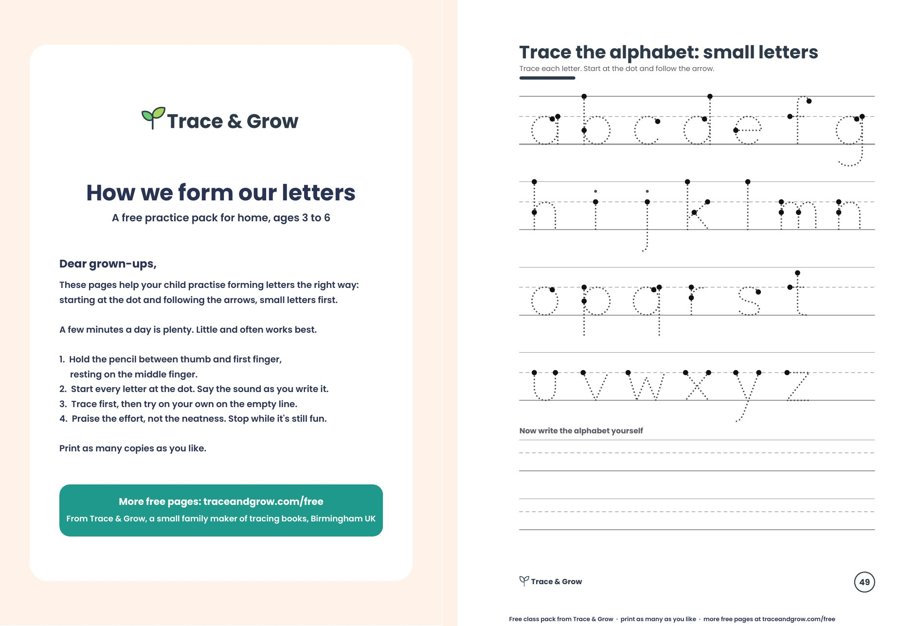
Free letter formation worksheets
Six pages for home or class: the alphabet, tracing every letter, tall and tail letters, and writing your name. Teachers, send it home with your class.
When you want more pages
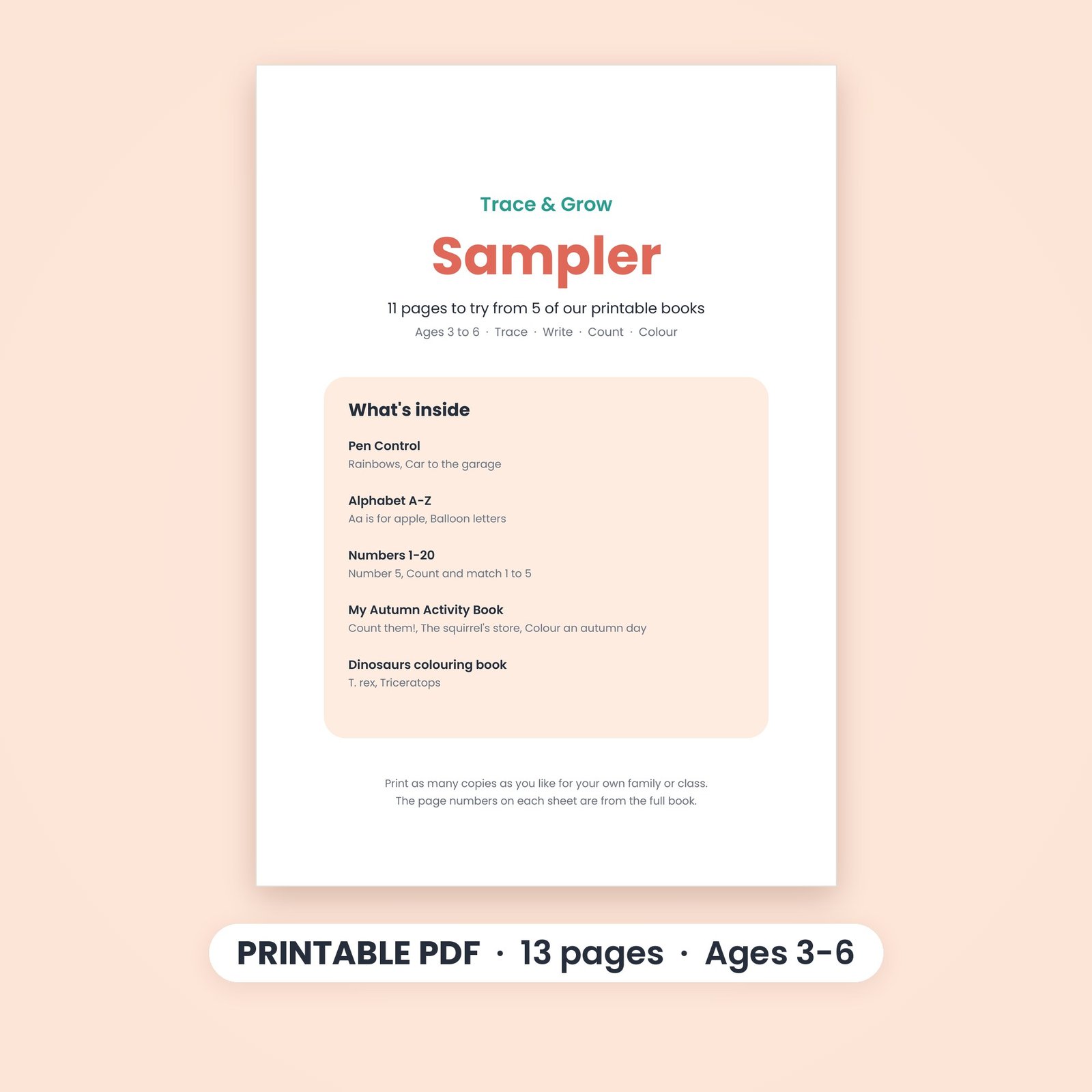 Try us for £1 · ages 3–6
Starter Sampler
11 real pages from five of our books, different from the free ones, to print at home. One per order.
See the sampler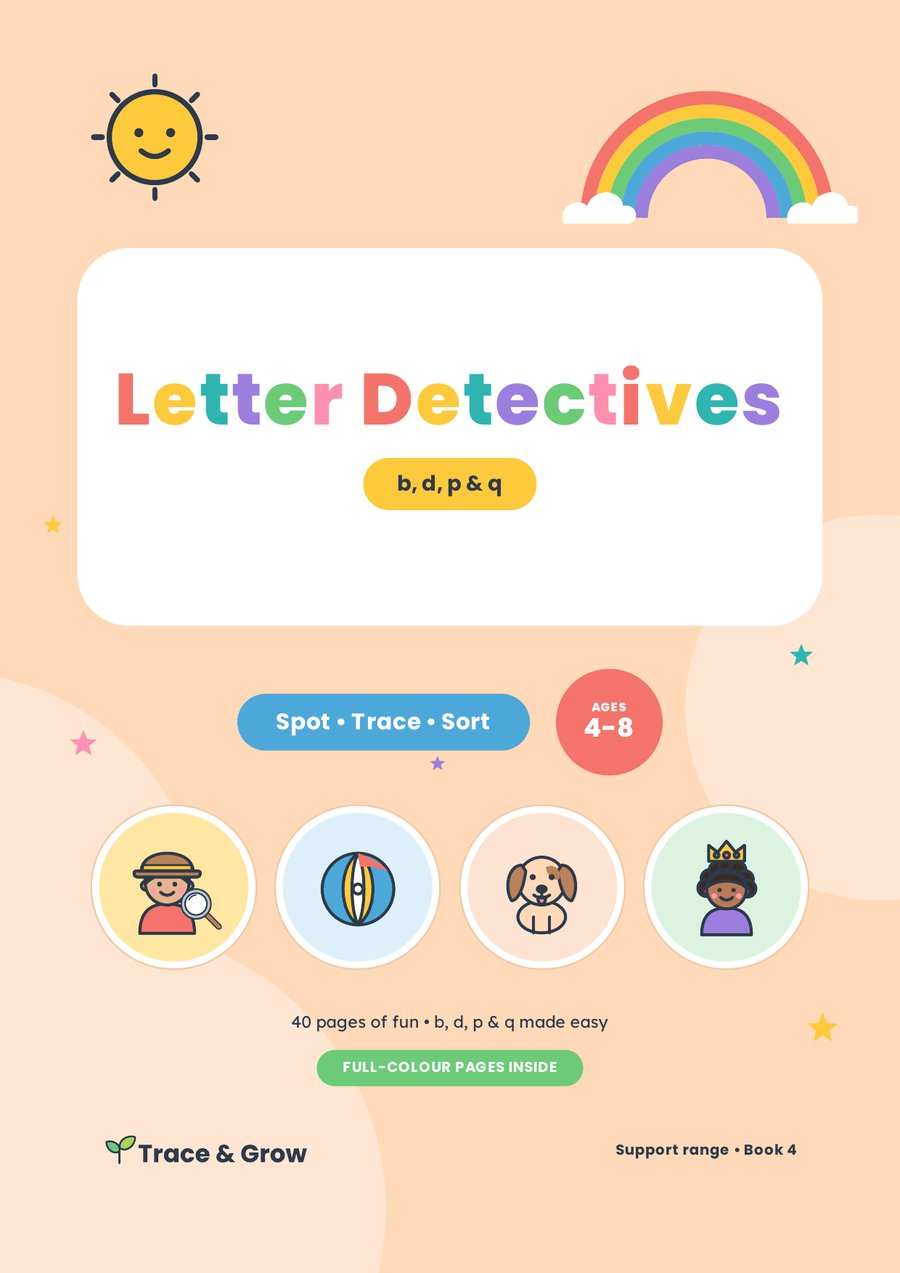 Ages 4–8
Letter Detectives
b, d, p and q one at a time, the bed trick and the fist trick, then spot, sort and match games. Cream pages, big letters.
See the book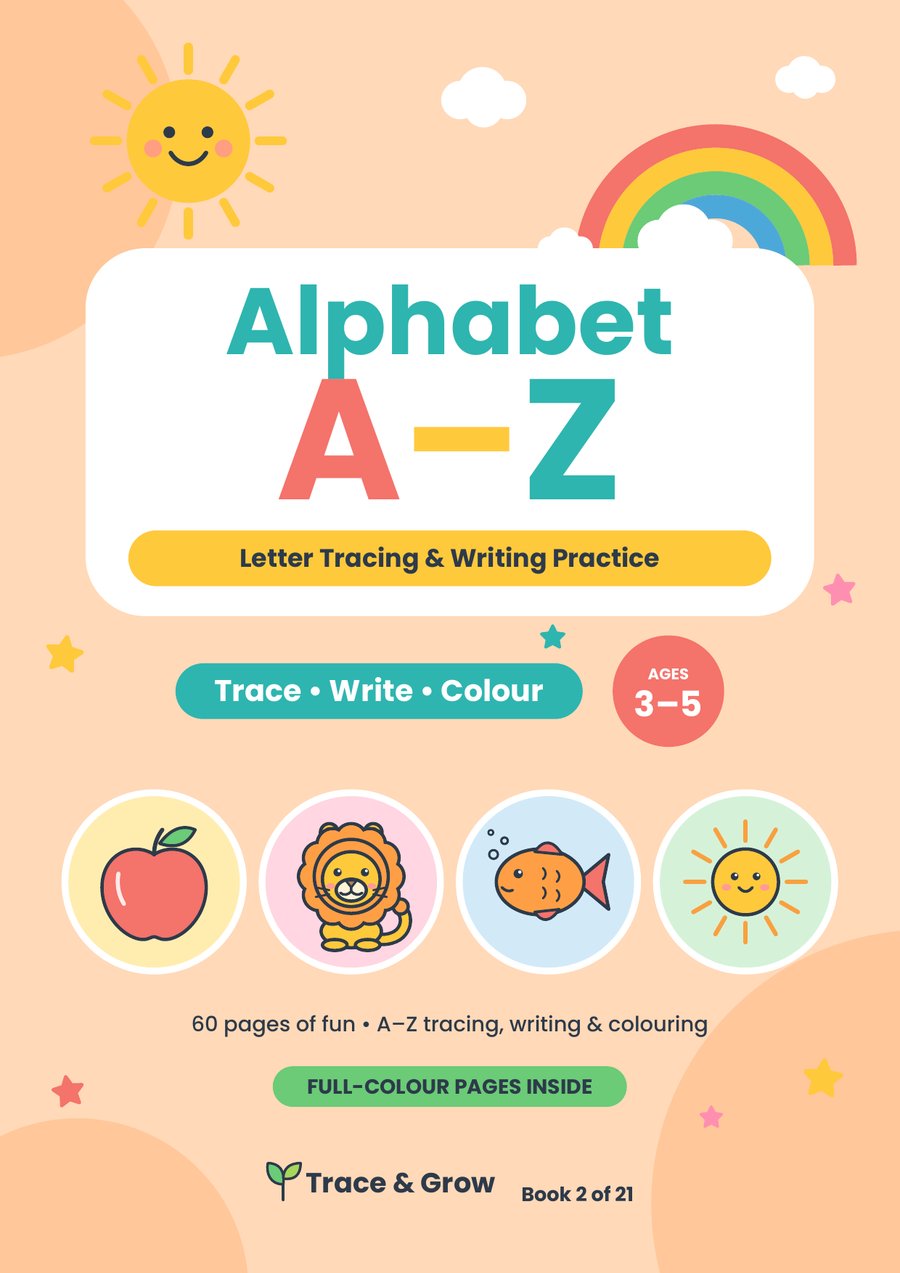 Ages 3–5
Alphabet A–Z
A page for every letter, small and capital, with start dots, arrows, a word to trace and lines to write on.
See the book Ages 5–7
5-Minute Handwriting
A warm-up, a little tracing and writing on handwriting lines: one short page a day for children who know their letters.
See the bookQuestions parents ask
Is it normal for children to mix up b and d?
Yes, it's very common while children are learning to read and write, because the letters are mirror images. Most children sort them out with practice. If you're worried, speak to your child's teacher.
What is the bed trick for b and d?
Make two fists with your thumbs up and knuckles together. The left hand makes a b, the right hand makes a d, and the shape looks like a bed. The word bed starts with b and ends with d.
Should I teach b and d together?
It usually helps to teach them separately, on different days, and only bring them together for sorting games once each one is secure.
Read next
More guides
- Tracing worksheets for 3 year olds: where to start
- Pre-writing shapes and patterns: what to practise before letters
- Phase 2 phonics letter formation: tracing s, a, t, p and the first sounds
- Handwriting practice for Reception: a calm routine for home
- Visual timetable for home: how to make one work
- Arabic letter forms: the beginning, middle and end shapes
- How to teach a child to write their name
- Number formation rhymes for 0 to 10
Get a new free page every month
Join the list for a printable star chart, 10% off books in your first order (not the UK delivery included in each price) and a monthly email with new free pages. Unsubscribe any time.