
Guides / Reception year
Reception yearHandwriting practice for Reception: a calm routine for home
In Reception, handwriting is about forming letters the right way rather than making them neat or joined. A few minutes at home, a few times a week, backs up what your child is learning in class without turning it into homework.
What Reception is aiming for
The early years framework for England sets out what most children are working towards by the end of Reception. For handwriting, that includes holding a pencil effectively, using a tripod grip in almost all cases, and writing recognisable letters, most of which are correctly formed. It doesn't ask for joined writing or tiny, tidy letters.
A five-minute routine
- Warm up: one row of waves or loops, or a minute of play dough squeezing.
- Model: write one letter while your child watches, saying where it starts and which way it goes.
- Trace: your child traces the letter two or three times, saying the sound.
- Write: they write it on their own and circle the one they like best.
- Use it: write a word or their name with that letter in.
What to focus on
- Starting points. Where a letter starts matters more than how it looks. Starting in the right place now makes joining up much easier later.
- Letter families. Letters that start the same way are easier to learn together, such as c, a, d, g, o and q.
- Tall letters and tails. Lines with a clear baseline help children see that h and k reach up and g and y hang down.
- Comfort. Sitting at a table with feet supported, and the paper held still with the other hand, makes writing less tiring.
Keep it positive
Children in Reception tire quickly, and that's fine. Stop on a good letter, keep the praise specific ("you started that d in just the right place") and leave the rest for another day. If you have questions about your child's writing, their class teacher knows them best.
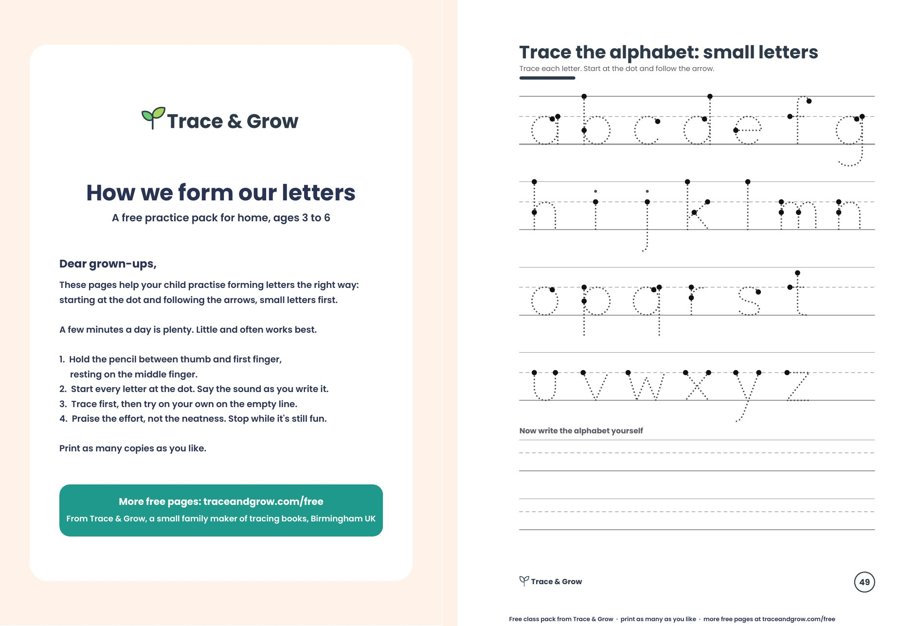
Free letter formation worksheets
Six pages for home or class: the alphabet, tracing every letter, tall and tail letters, and writing your name. Teachers, send it home with your class.
When you want more pages
 Try us for £1 · ages 3–6
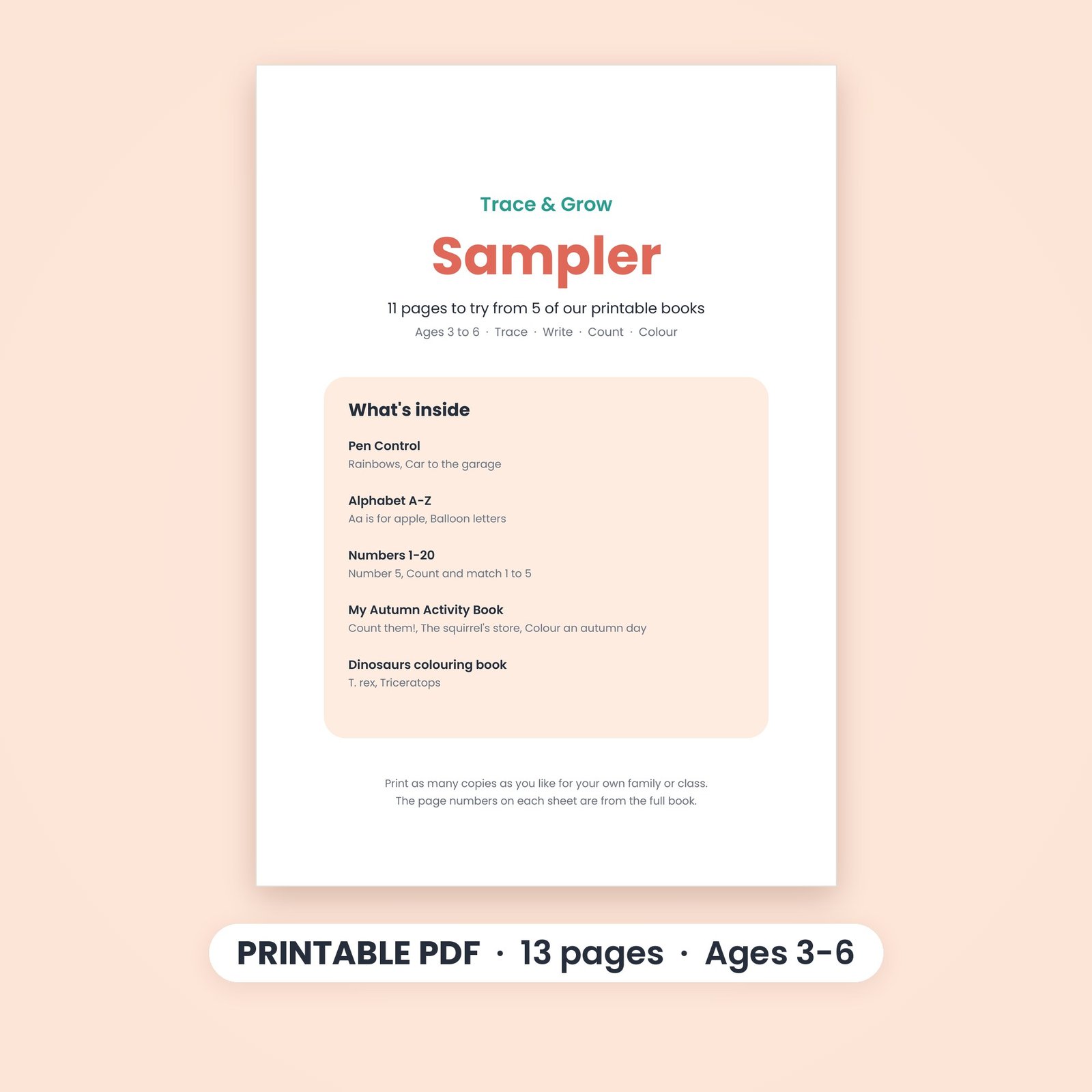
Starter Sampler
11 real pages from five of our books, different from the free ones, to print at home. One per order.
See the sampler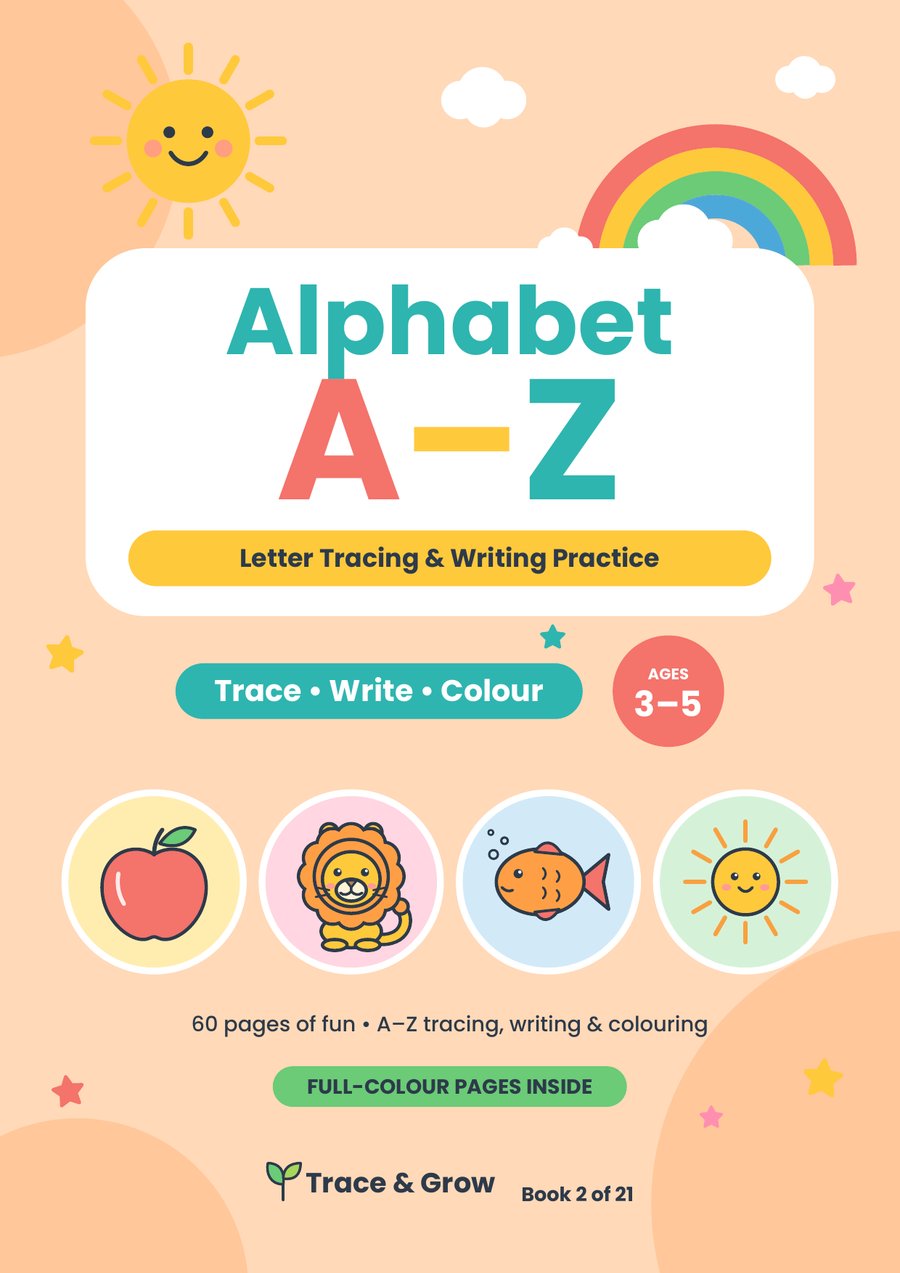 Ages 3–5
Alphabet A–Z
A page for every letter, small and capital, with start dots, arrows, a word to trace and lines to write on.
See the book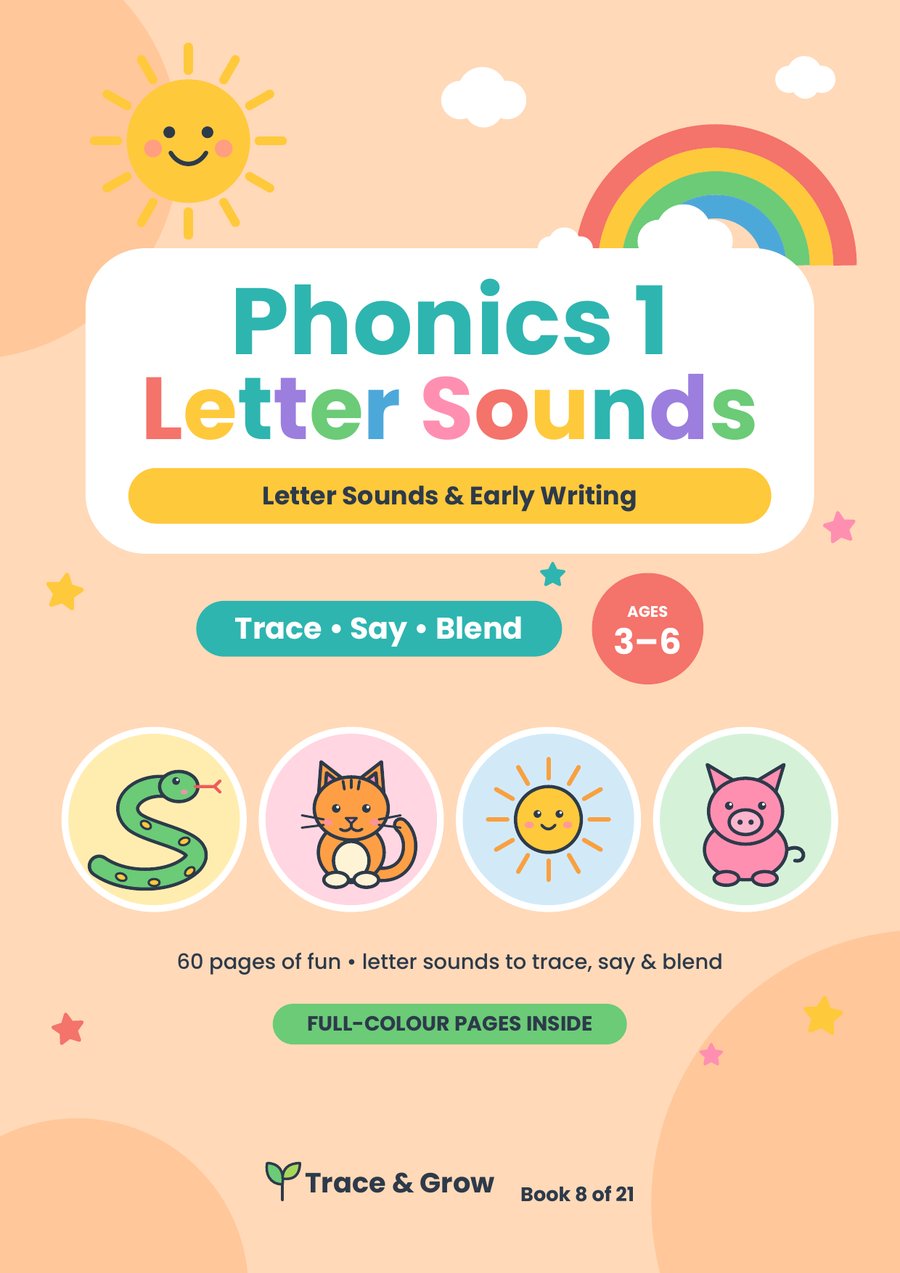 Ages 3–6
Phonics 1: Letter Sounds
Trace, say and blend the first sounds in small groups, with a write-it-yourself line after every tracing row.
See the book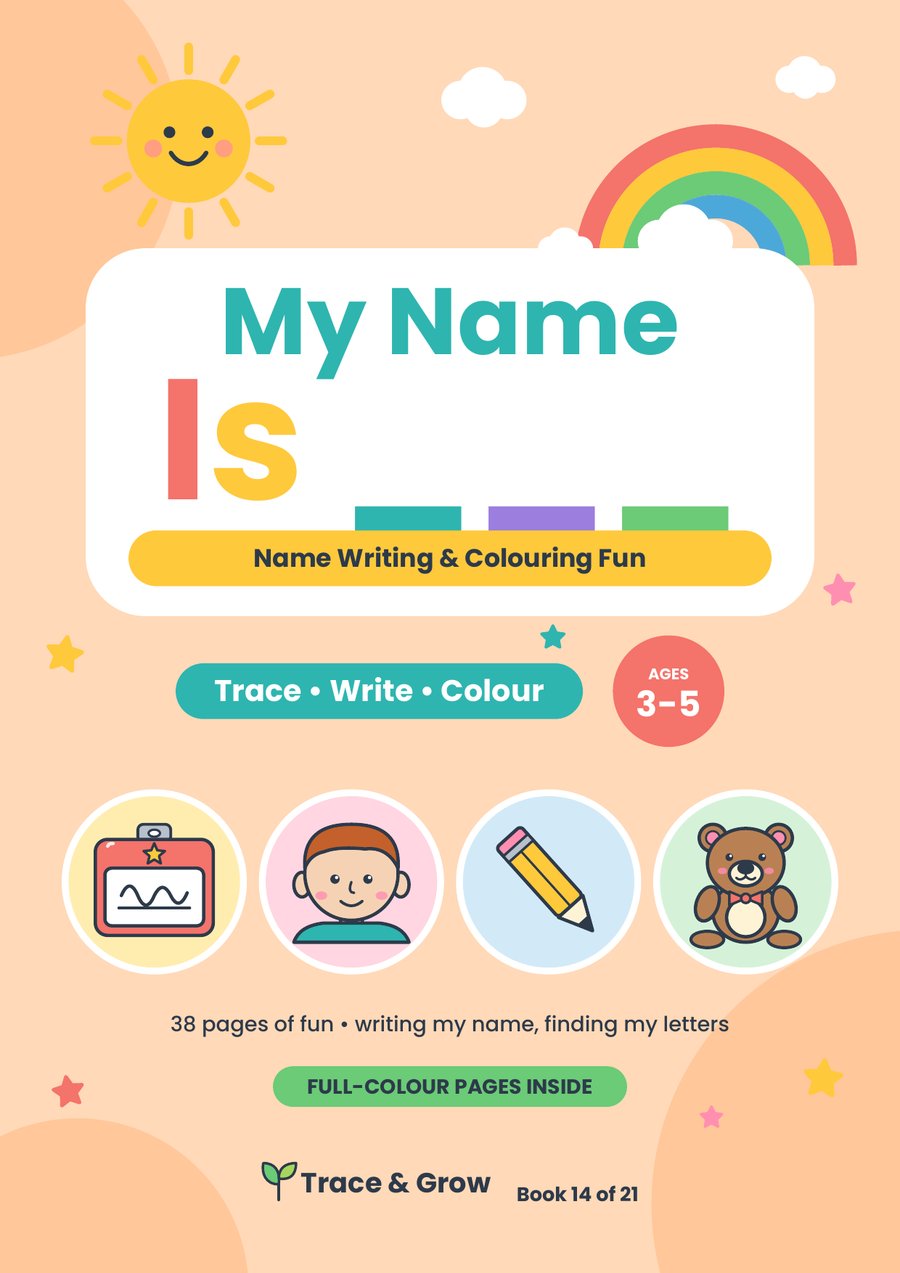 Ages 3–5
My Name Is
A grown-up writes the name as a model, then your child traces it, copies it on writing lines and plays name games.
See the book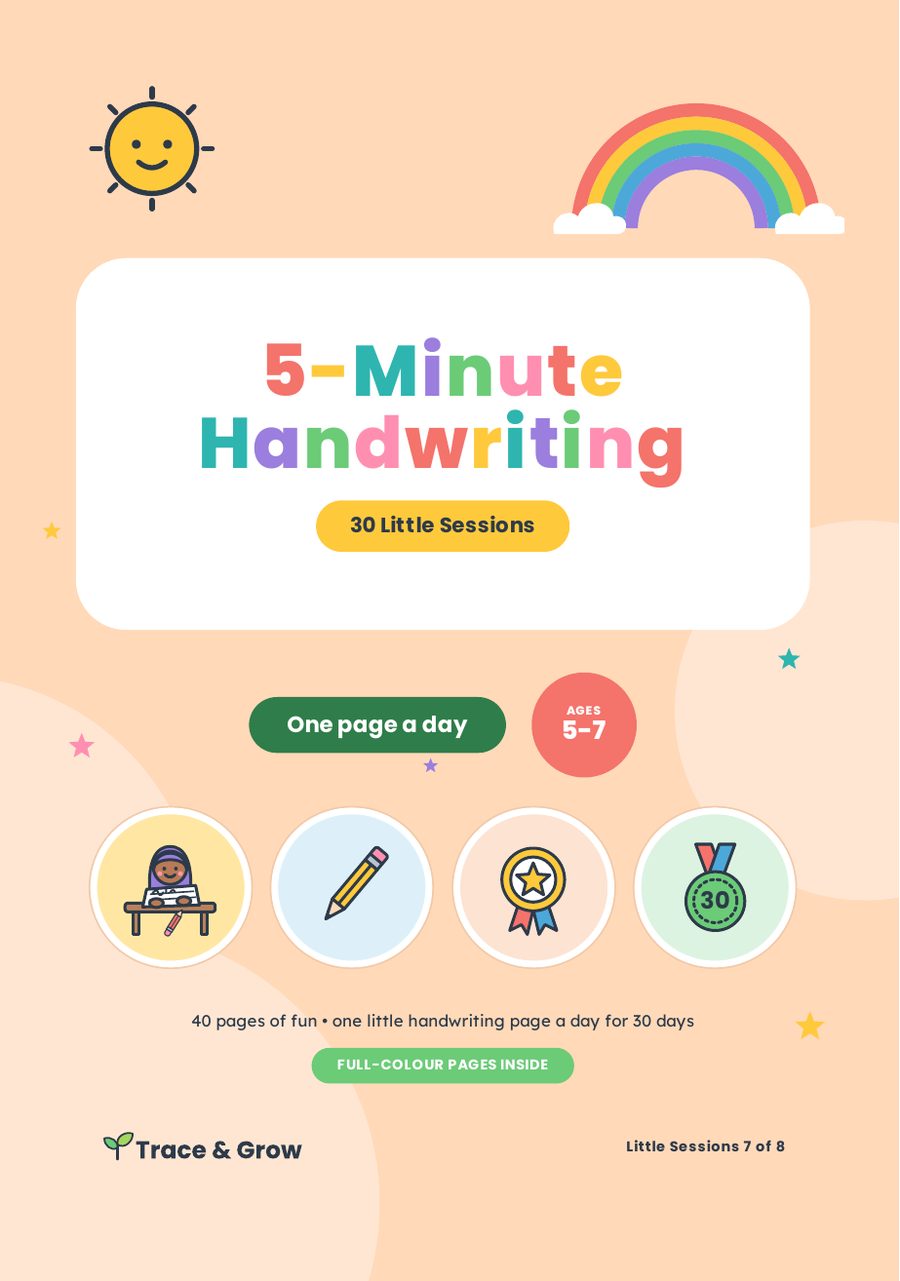 Ages 5–7
5-Minute Handwriting
A warm-up, a little tracing and writing on handwriting lines: one short page a day for children who know their letters.
See the bookQuestions parents ask
Should Reception children be joining their handwriting?
Usually not. The focus in Reception is on forming letters correctly, starting in the right place. Many schools introduce joining later, in Year 1 or Year 2, and some teach letters with small exit flicks from the start.
How much handwriting practice should a Reception child do at home?
A few minutes, a few times a week, is plenty. Short, regular practice tends to work better than long sessions.
Which letters should we practise first?
The letters your child is learning in phonics, and the letters in their name. Ask the teacher which order the class is following.
Read next
More guides
- Tracing worksheets for 3 year olds: where to start
- Pre-writing shapes and patterns: what to practise before letters
- Phase 2 phonics letter formation: tracing s, a, t, p and the first sounds
- b and d mix-ups: simple tricks and worksheets that help
- Visual timetable for home: how to make one work
- Arabic letter forms: the beginning, middle and end shapes
- How to teach a child to write their name
- Number formation rhymes for 0 to 10
Get a new free page every month
Join the list for a printable star chart, 10% off books in your first order (not the UK delivery included in each price) and a monthly email with new free pages. Unsubscribe any time.