
Guides / Routines
RoutinesVisual timetable for home: how to make one work
A visual timetable shows the parts of the day as pictures, in order. Many children find it easier to look at what's coming next than to remember a list of spoken instructions, and it can take some of the arguing out of getting dressed or going to bed. Nurseries and schools use them a lot, and they work at home too.
Setting one up
- Start small. A whole day of pictures can be too much. Try one routine, such as the morning, with four to six steps.
- Use one picture per step, with a simple word underneath. Clear drawings or photos of your own things both work.
- Put it where the routine happens and at your child's eye level: by the front door, in the bedroom or in the bathroom.
- Run it from top to bottom or left to right, and keep the order the same every day.
Using it every day
- Point to the picture as you say what's happening: "Now teeth, then shoes."
- When a step is done, let your child tick it, turn the card over or move it to a "finished" pocket. Seeing the list shrink is satisfying.
- Go through the timetable together before the routine starts, not only when things go wrong.
- Praise the steps they do on their own, however small.
Now and next
If a full timetable is too much, a now and next board shows just two pictures: what we're doing now and what comes next. It's a good place to start for younger children, and handy for something less popular followed by something your child enjoys.
Showing changes
Days don't always go to plan. Keep a "change" card, or simply swap the picture while your child watches, and talk about the change before it happens. A short picture story about something new, such as a dentist visit, can help in the same way.
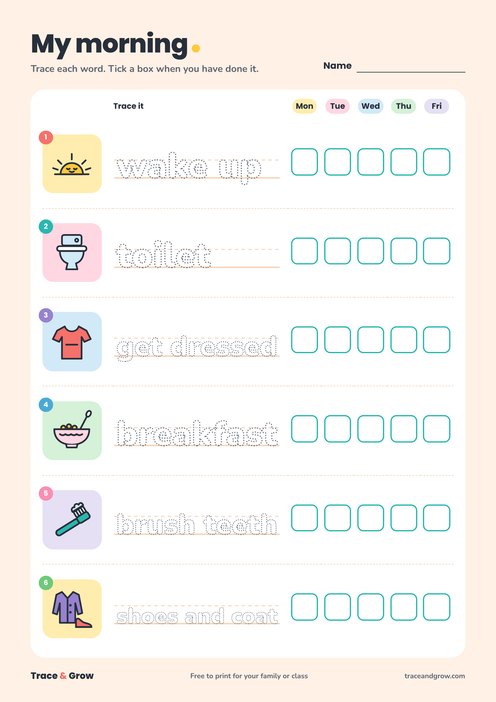
Free daily routine chart
A morning and an evening routine with pictures, words to trace and boxes to tick, plus a page to make your own. Three A4 pages.
When you want more pages
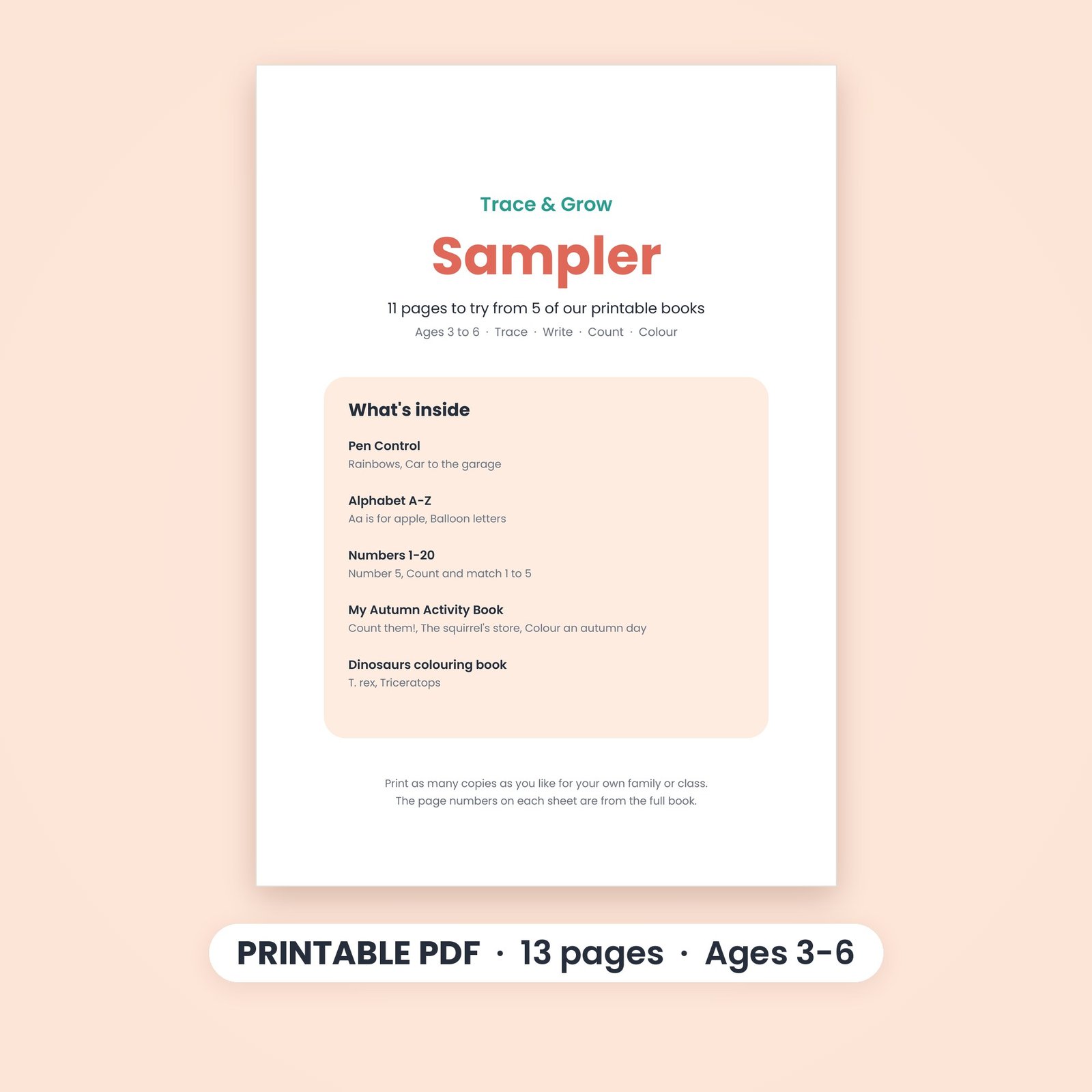 Try us for £1 · ages 3–6
Starter Sampler
11 real pages from five of our books, different from the free ones, to print at home. One per order.
See the sampler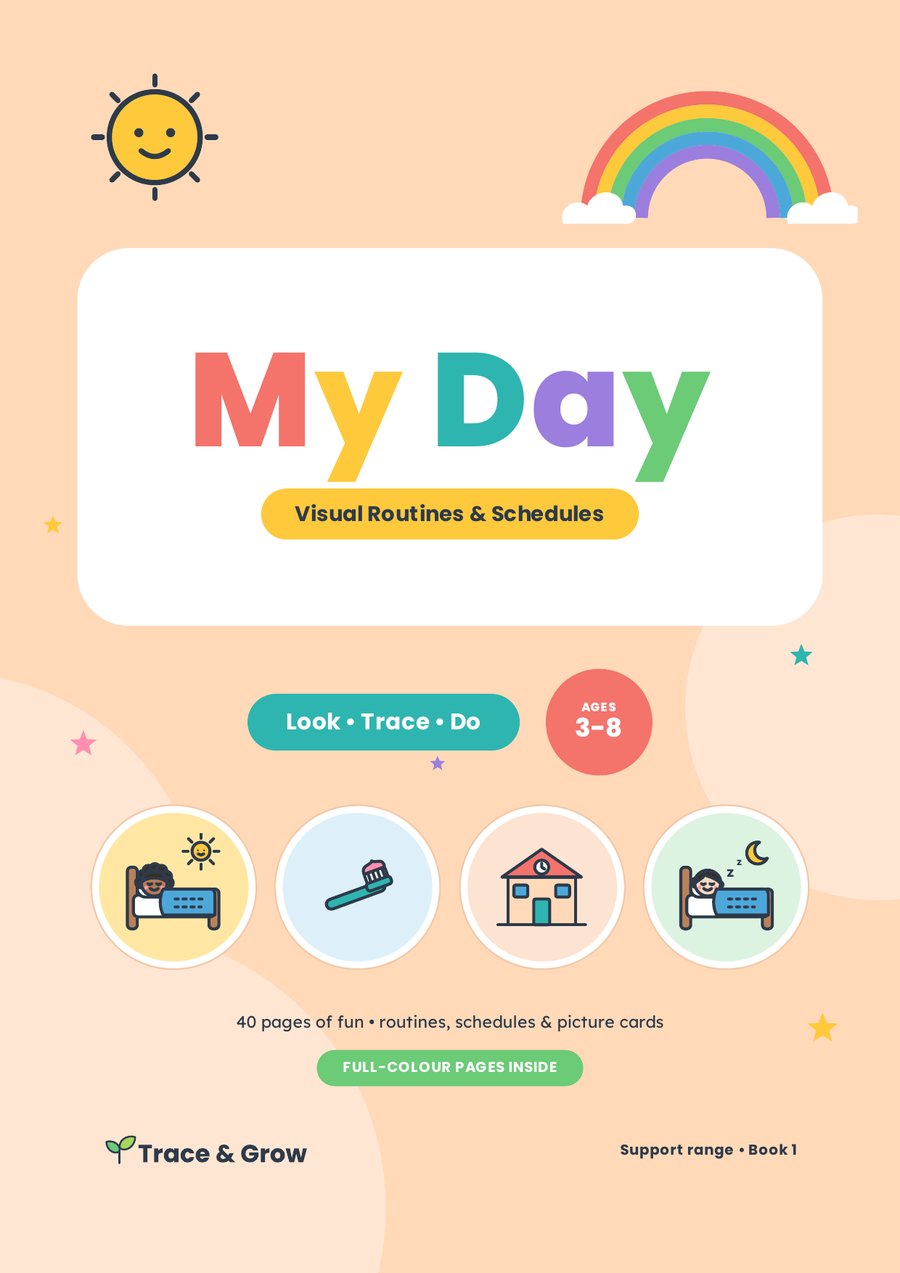 Ages 3–8
My Day
Now and next, first and then, and day boards; ten routines step by step; and 48 cut-out picture cards.
See the book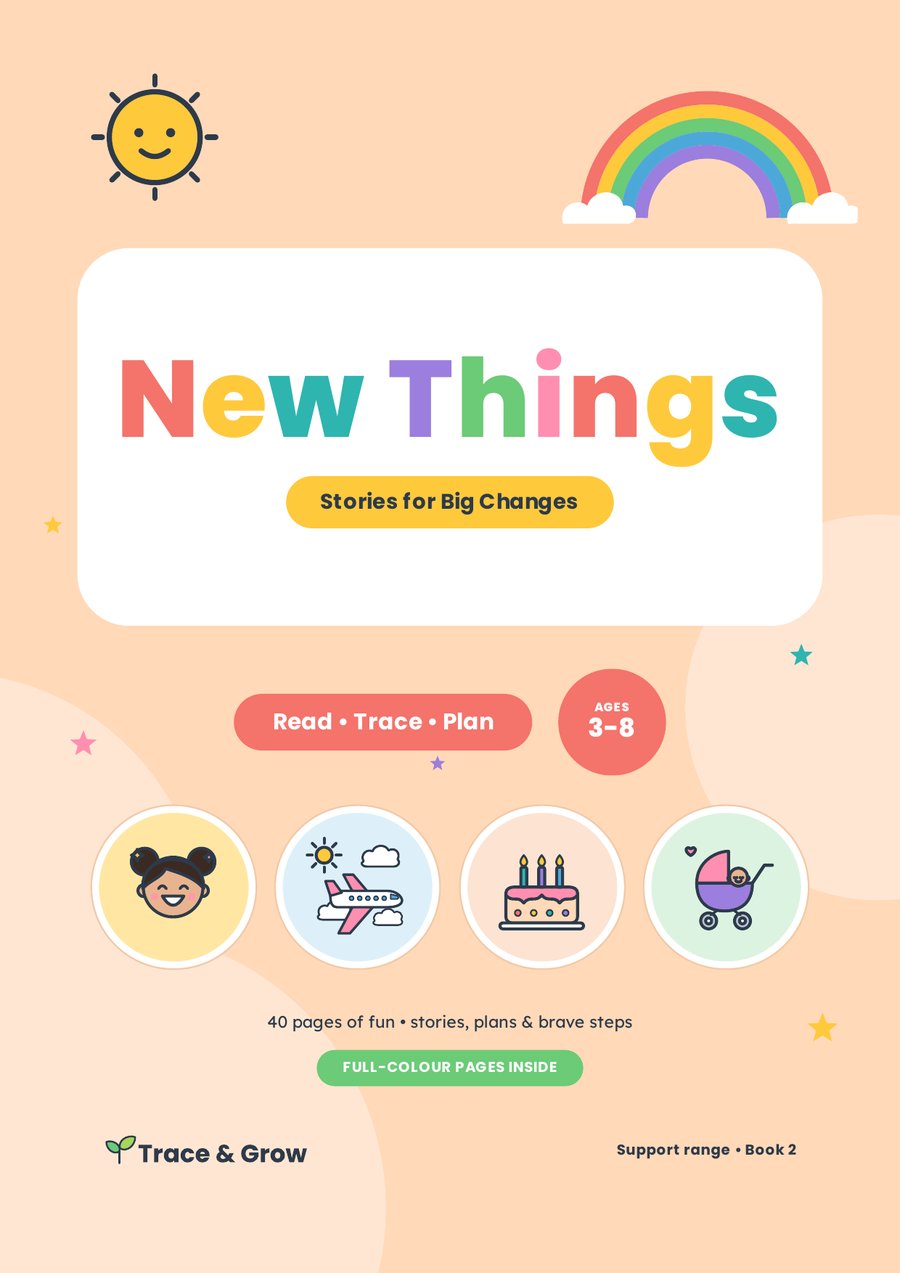 Ages 3–8
New Things
Eight short picture stories for changes such as a new teacher, the dentist or moving, with a plan page after each.
See the bookQuestions parents ask
What is a visual timetable?
A set of pictures that shows the parts of a day or a routine in order, so a child can see what is happening now and what comes next.
How many pictures should a visual timetable have?
Start with four to six for one routine, such as the morning. You can add more, or a second routine, once that one is working well.
What is a now and next board?
A simpler visual timetable with just two pictures: what is happening now and what comes next. It's a good starting point for younger children.
Read next
More guides
- Tracing worksheets for 3 year olds: where to start
- Pre-writing shapes and patterns: what to practise before letters
- Phase 2 phonics letter formation: tracing s, a, t, p and the first sounds
- Handwriting practice for Reception: a calm routine for home
- b and d mix-ups: simple tricks and worksheets that help
- Arabic letter forms: the beginning, middle and end shapes
- How to teach a child to write their name
- Number formation rhymes for 0 to 10
Get a new free page every month
Join the list for a printable star chart, 10% off books in your first order (not the UK delivery included in each price) and a monthly email with new free pages. Unsubscribe any time.