
Guides / Ages 3 and up
Ages 3 and upTracing worksheets for 3 year olds: where to start
At three, most children are still finding out what a pencil can do. The best tracing worksheets for this age aren't letters yet: they are big, simple paths with a clear place to start, so your child can enjoy steering the pencil and feel they've finished something.
What to trace first
Start with lines and journeys rather than letters. Each new step uses movements that letters need later.
- Straight lines from top to bottom, then from left to right.
- Gentle waves and hills, then zigzags with sharp corners.
- Circles, loops and spirals, which take more control than they look.
- Simple shapes such as a cross, a square and a triangle.
- Short mazes and picture paths, like helping a car get to its garage.
How to make it work
- Keep it short. A few minutes, or one page, is plenty. Stop while your child still wants more.
- Look for a start dot and an arrow on every path, so they always know where to begin and which way to go.
- Offer chunky crayons, triangular pencils or short pencils, which suit small hands.
- Trace with a finger first, then with the pencil. Saying the movement out loud ("down, and stop") helps too.
- Praise the trying, not the neatness. Wobbly lines that stay roughly on the path are a good result at this age.
- Slip a page into a plastic sleeve and use a dry-wipe pen to practise the same path again and again without printing more.
Away from the page
Pencil skills grow from play as well as worksheets. Play dough, threading big beads, tearing paper, posting buttons into a pot (with a grown-up watching) and drawing in sand or shaving foam all use the same small muscles. If your child doesn't want to sit down with a worksheet today, one of these is just as worthwhile.
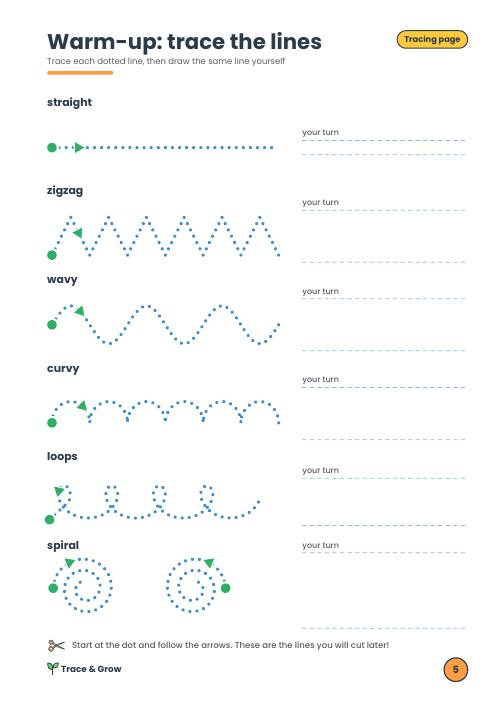
Free pencil control worksheets
Lines, zigzags, waves, loops and spirals to do before any writing. Two A4 pages.
When you want more pages
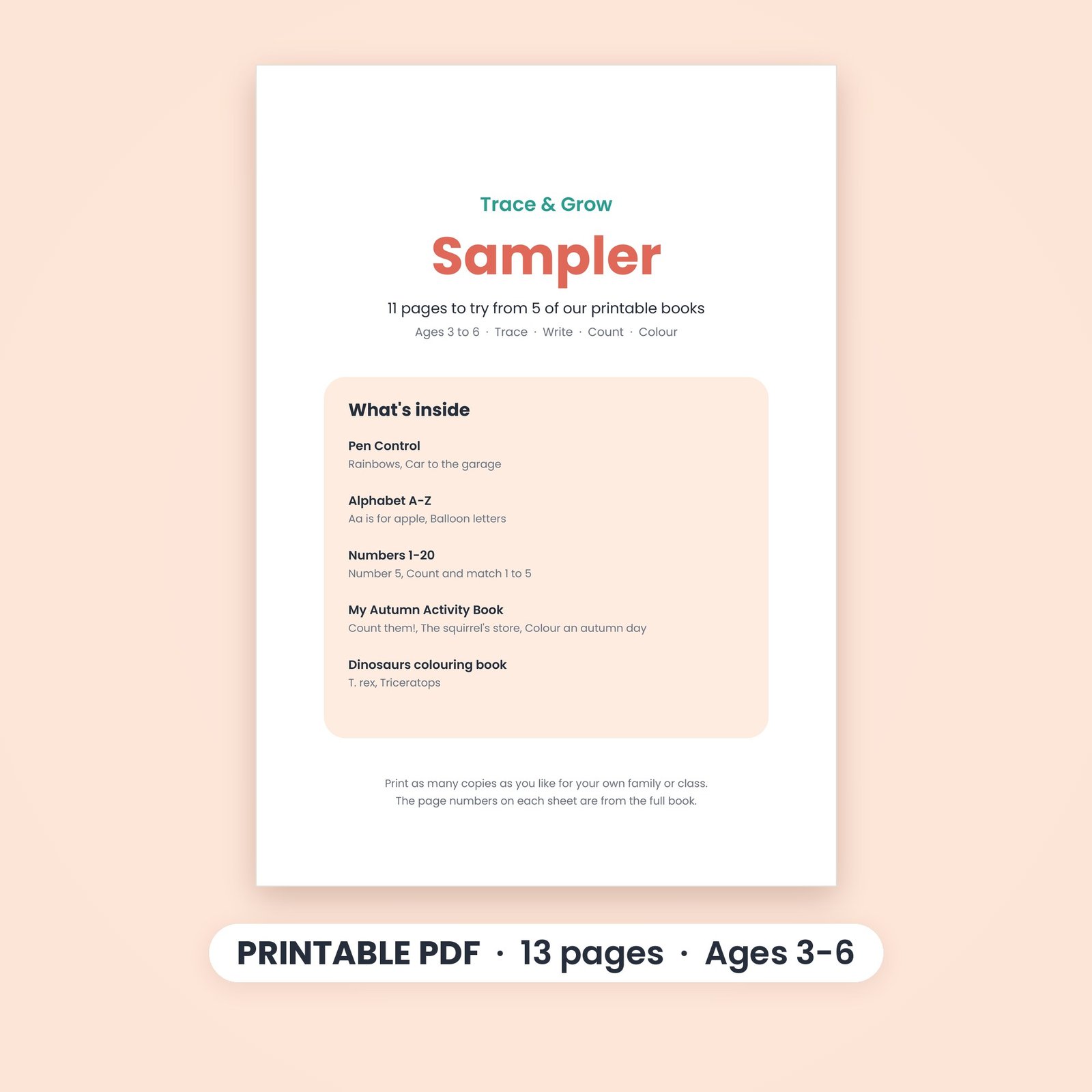 Try us for £1 · ages 3–6
Starter Sampler
11 real pages from five of our books, different from the free ones, to print at home. One per order.
See the sampler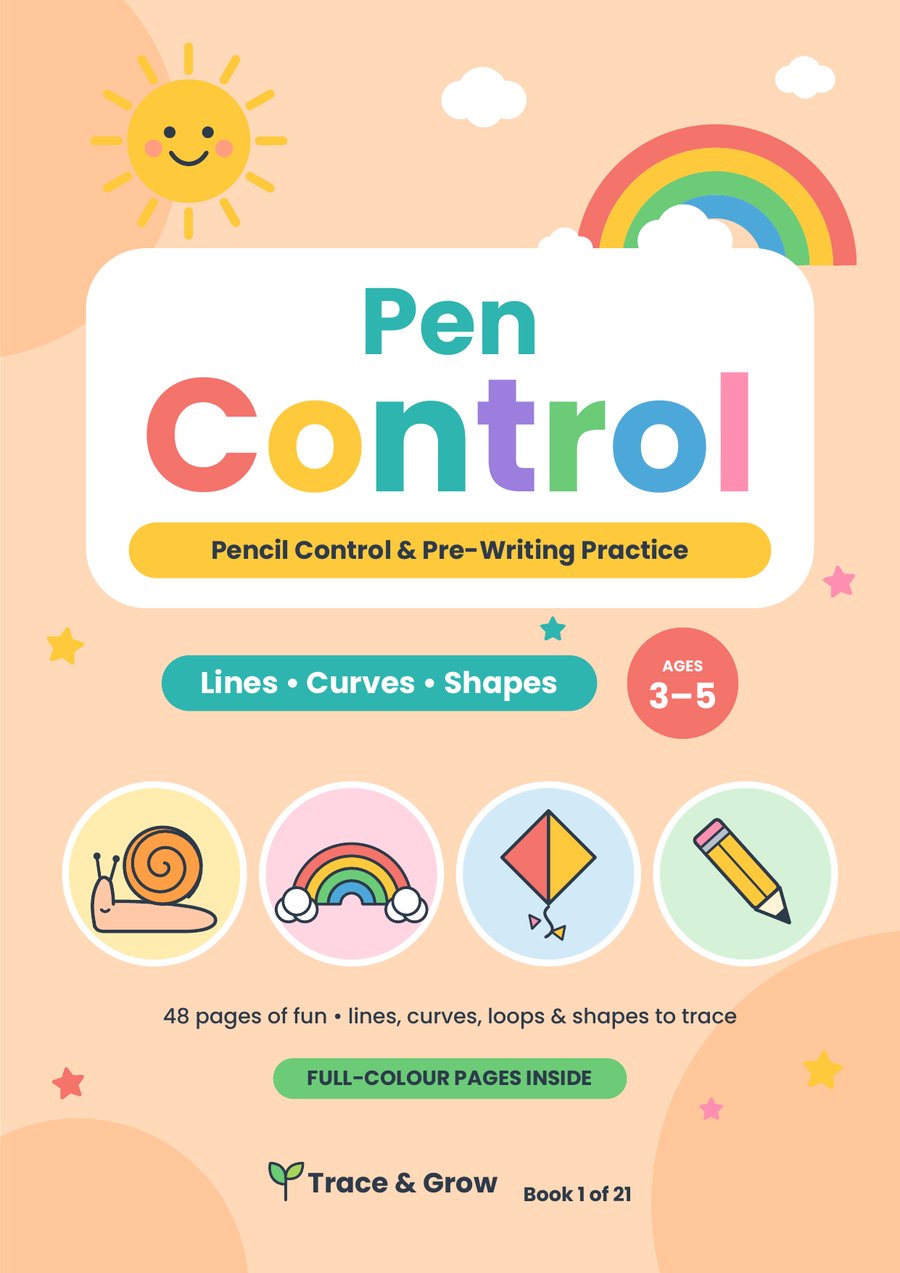 Ages 3–5
Pen Control
48 pages of lines, zigzags, waves, loops, spirals and shapes, with start dots and arrows on every path.
See the book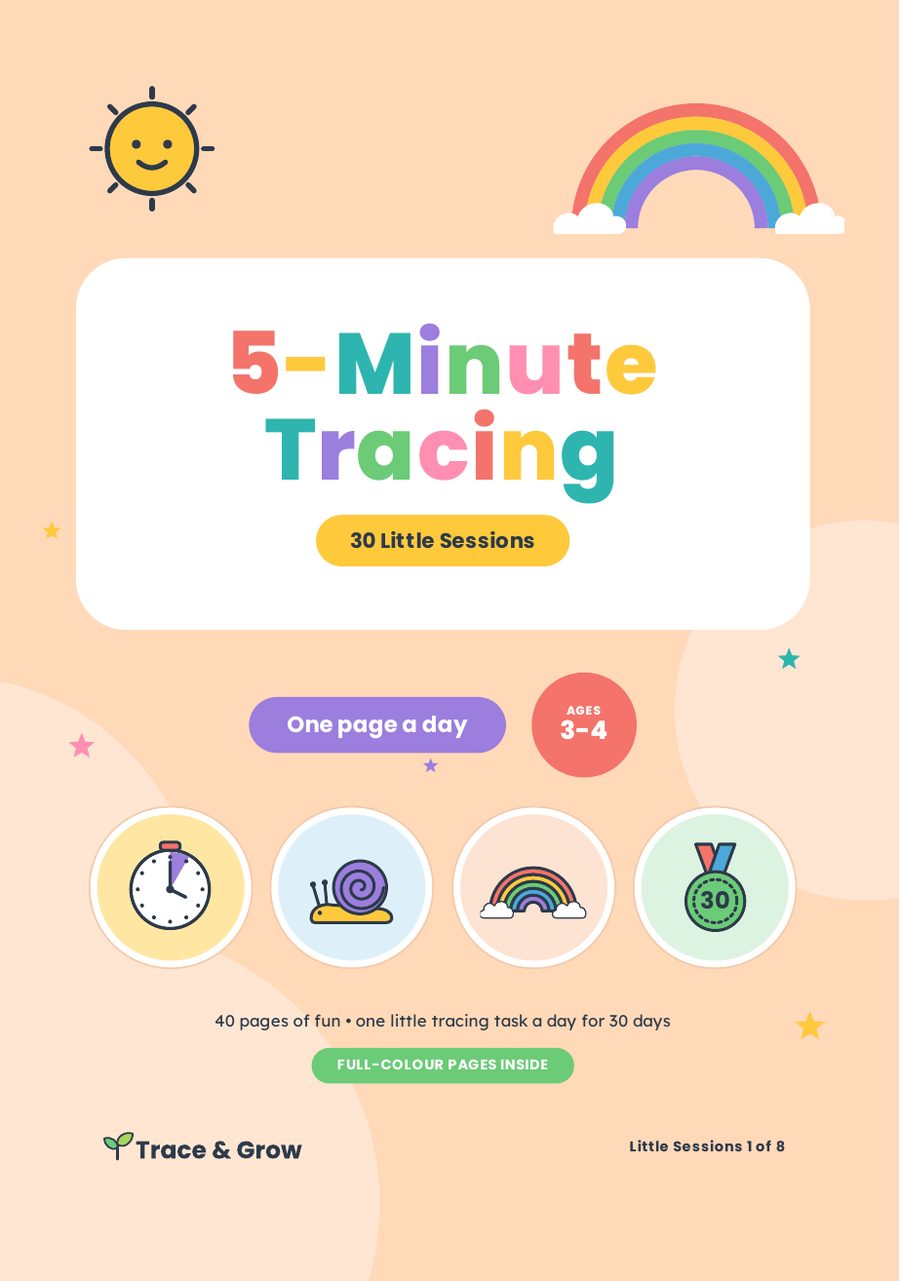 Ages 3–4
5-Minute Tracing
One short tracing page a day for 30 days, growing gently harder from lines to first letter-like patterns.
See the book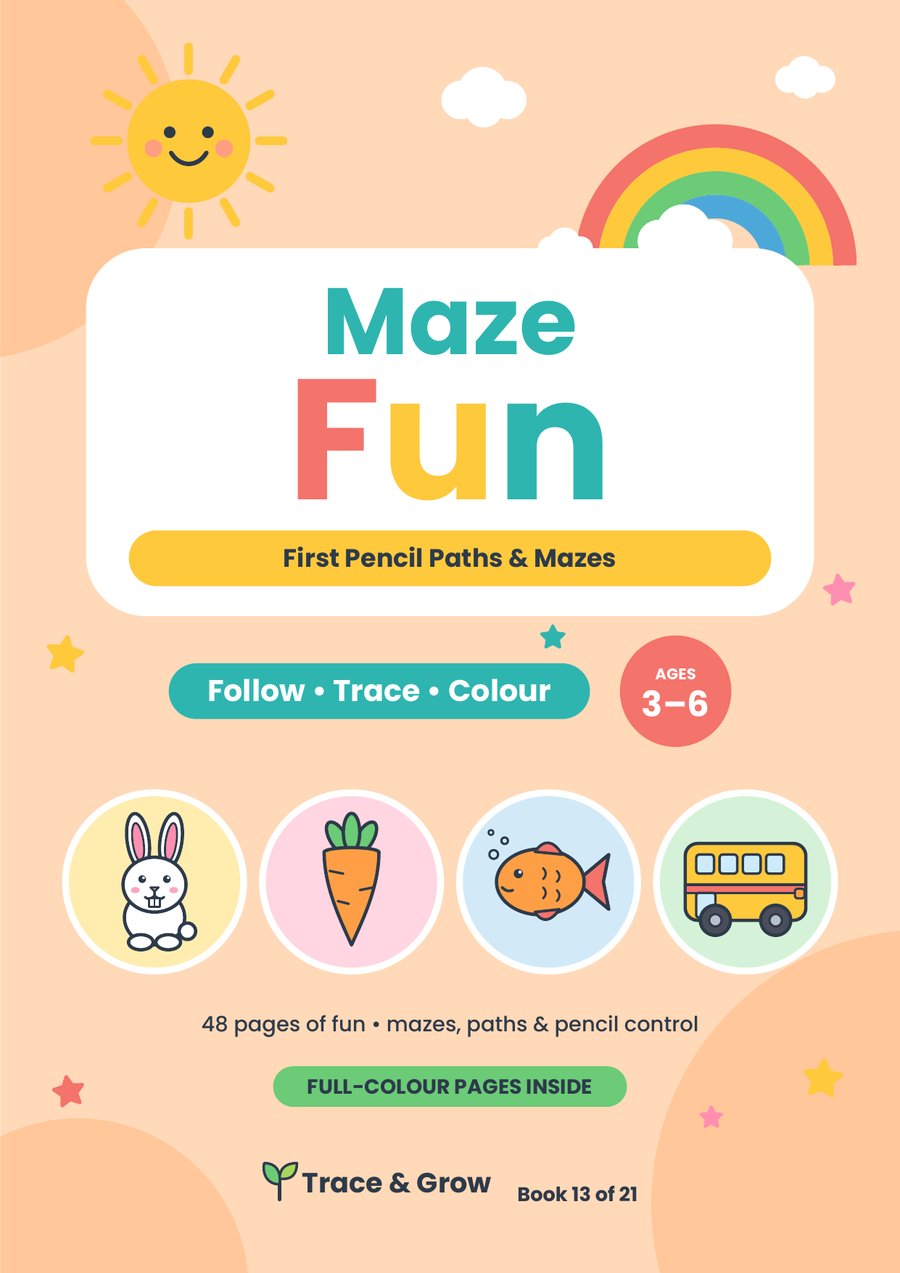 Ages 3–5
Maze Fun
Wide pencil paths first, then easy mazes with chunky corridors, then bigger mazes in fun shapes.
See the book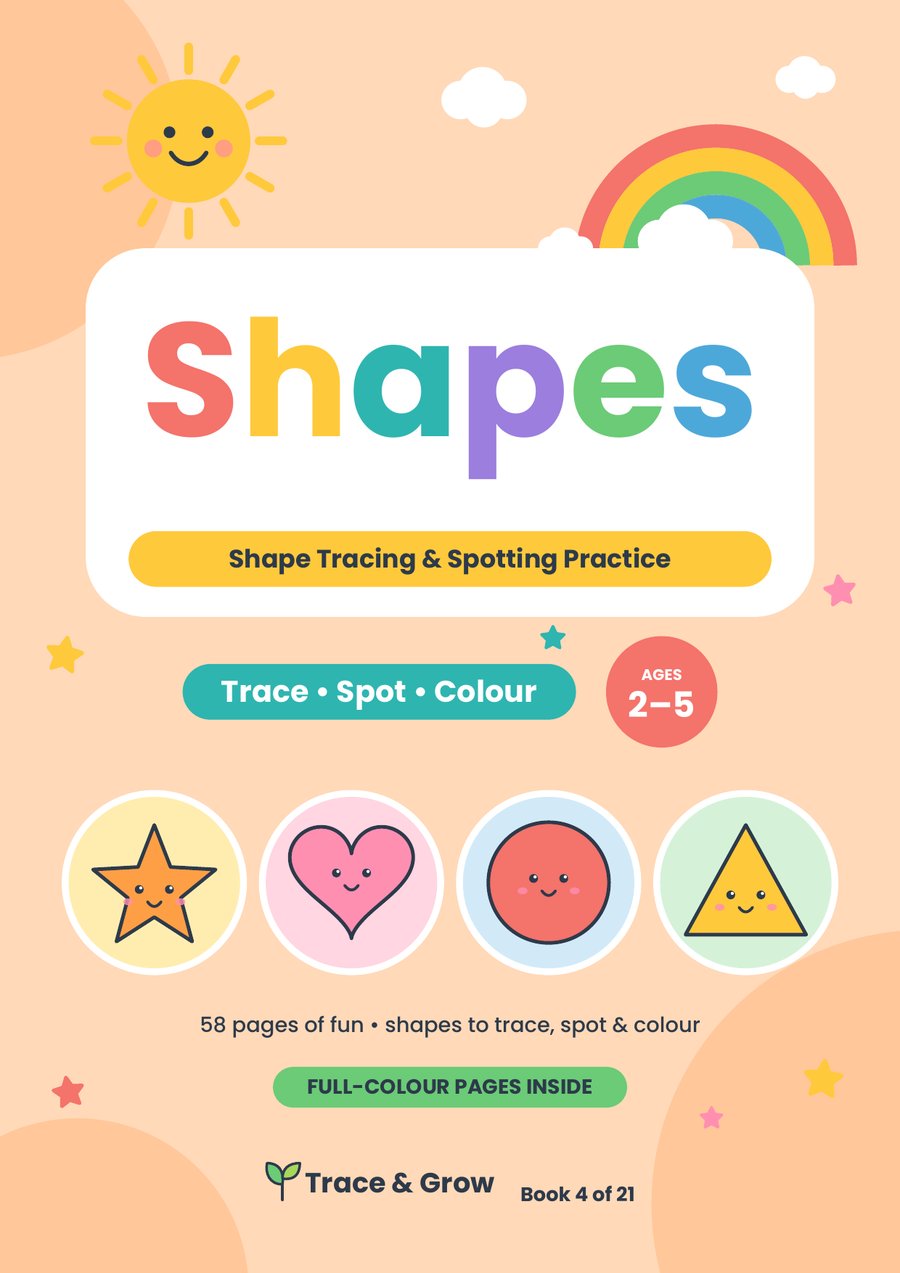 Ages 2–5
Shapes
Twelve shapes to trace, spot and colour, each with a big dotted outline and smaller ones to practise.
See the bookQuestions parents ask
Can a 3 year old do tracing worksheets?
Many can, as long as the paths are big and simple and the sessions are short. Start with lines, waves and mazes rather than letters, and follow your child's lead: if they lose interest, put it away and try play dough or drawing instead.
How long should a 3 year old spend on tracing?
A few minutes, or a single page, is usually enough. Short, happy sessions a few times a week tend to work better than one long one.
Should 3 year olds trace letters?
Letters can wait until lines, curves and circles feel easy. If your child is keen, start with the letters in their own name.
Read next
More guides
- Pre-writing shapes and patterns: what to practise before letters
- Phase 2 phonics letter formation: tracing s, a, t, p and the first sounds
- Handwriting practice for Reception: a calm routine for home
- b and d mix-ups: simple tricks and worksheets that help
- Visual timetable for home: how to make one work
- Arabic letter forms: the beginning, middle and end shapes
- How to teach a child to write their name
- Number formation rhymes for 0 to 10
Get a new free page every month
Join the list for a printable star chart, 10% off books in your first order (not the UK delivery included in each price) and a monthly email with new free pages. Unsubscribe any time.